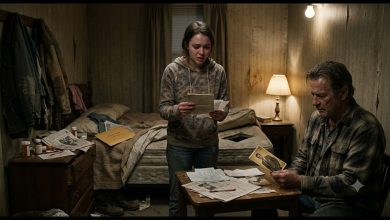
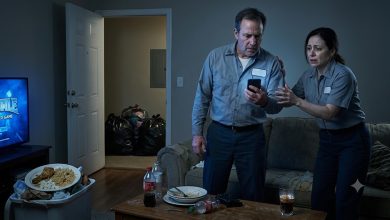
“Melissa,” I said, “I need you to listen to me carefully.” She looked up at me, irritated.
Part I: The Fall and The Sentence
My sister lived in my house for free with her husband and son. 😱😠⚠️
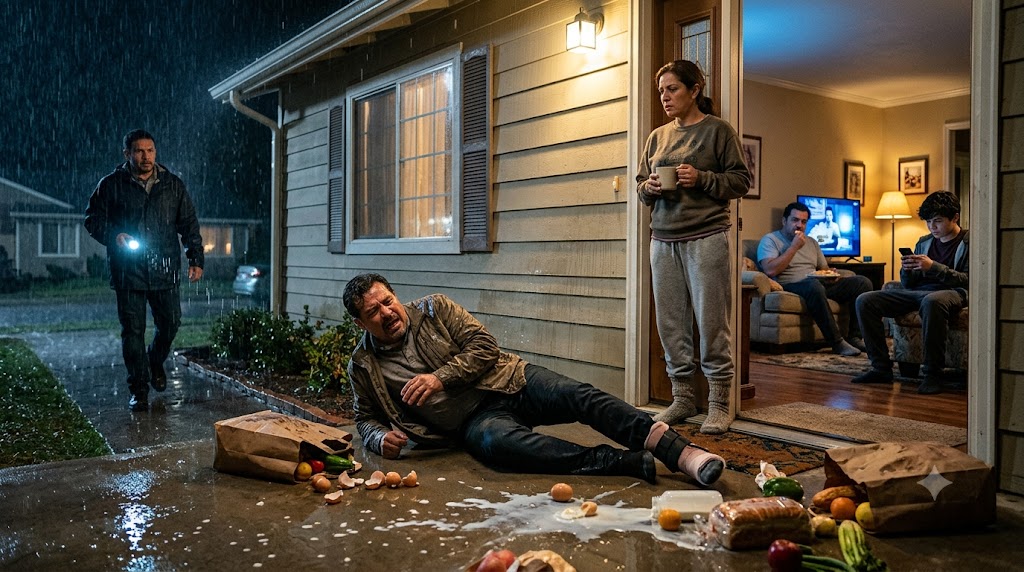
One night, I got hurt out in the rain, and she told me: “We’re not your servants.” They left me lying on my own porch and kept watching TV. I had to call a neighbor because my own family wouldn’t help me up. That same night, with a broken ankle 🥹⚠️, I gave them five minutes to realize my home was no longer a shelter for ungrateful people.
My name is Esteban.
I bought my house at 31, after seven years of working myself to the bone. It wasn’t luck. It meant no vacations, eating at my desk, and saying no to everything fun because I wanted a place of my own. When I finally signed the papers, I sat in my car and cried like a child. It was mine. My house. My effort. My roof.
Eighteen months later, I opened my door to my sister Melissa, her husband Darío, and their son Nico. They had lost their apartment and blamed it on a chain of bad luck. I didn’t judge. I told them they could stay for six weeks until they got back on their feet. Melissa hugged me and promised they wouldn’t take advantage.
Six weeks turned into eight months.
Soon, Darío stopped looking for work and just played games on his phone. Melissa acted like my kitchen belonged to her. Nico trashed the guest room, my pantry emptied out fast, and the bills skyrocketed. But I stayed quiet because she was my sister, and I thought family helps family. No one told me that helping meant being used as an ATM and an inconvenience inside your own home.
One rainy Thursday in October, I left work late. I stopped by the store to buy groceries, including things Melissa texted me to get. She didn’t even say thank you; she just texted to remind me to bring detergent.
I arrived home with full bags in my hands and my briefcase in the other. Walking up, I missed the wet step. My right foot slipped.
There was a loud, sickening crack. Ugly. Final.
Terrible pain shot through my whole body. The bags ripped, and food rolled everywhere. I fell onto the wet concrete, unable to move.
“Melissa!” I screamed.
Nothing. Only the sound of the pouring rain.
Then, I saw the living room curtain move. Someone saw me.
“Melissa! Help me!”
Inside, I heard Darío laughing, totally relaxed on my couch.
I yelled again, louder. The door finally opened. Melissa stepped out holding a warm cup of coffee. She looked at me on the ground, looked at the smashed food, and asked, “Did they all break?”
“I think my ankle is broken,” I gasped. “Call an ambulance.”
Darío walked up behind her, chewing. “Can’t you just get up?” Nico peeked out, looked at me like I was a boring TV show, and went back to his phone.
I tried to push myself up, groaning in pain. “Please, I need help.”
Melissa didn’t look worried; she looked annoyed. “Oh, Esteban, you always turn everything into someone else’s problem.”
I stared at her from the wet ground, surrounded by the food I bought for them. Then she said something that changed everything forever:
“We’re not your servants, Esteban.”
A freezing silence fell over me. I thought about the mortgage, the electricity, and the bills I paid alone while they treated my home like a free hotel. Lying there in the rain, my guilt completely disappeared.
I pulled out my phone and called my neighbor, Marcus. He was there in five minutes. He didn’t ask questions. He carefully helped me inside while my family just sat there.
We walked into the living room. Melissa, Darío, and Nico didn’t move. No one turned off the TV. No one said a word. Marcus sat me down, propped up my foot, and called for help.
I looked at my sister, who avoided my eyes. Darío mumbled, “What an exaggeration.”
That was the exact moment I realized they thought my kindness was an obligation.
I took a deep breath. My ankle was pounding, and my clothes were soaking wet, but my voice was completely calm.
“Melissa,” I said, “I need you to listen to me very carefully.”
She looked up at me, looking irritated.
Part II: The Ultimatum
“What do you want now?” she snapped.
The words hurt worse than my injury. Marcus, still checking my ankle, looked at her in disbelief.
“Your brother is hurt,” Marcus said. “He isn’t asking you to serve him coffee.”
Melissa crossed her arms. “Stay out of this, Marcus. You don’t know how things work here.”
I let out a cold laugh. “No, Melissa. He does know. He saw exactly what you chose to ignore.”
Darío finally turned off the TV—not out of concern, but because he realized there was a witness. “Look, Esteban,” he said, “don’t make this a tragedy. You fell. Help is on the way.”
“Help is coming because Marcus called,” I replied.
Nico stood up, looking annoyed. “Can I go to my room?”
My guest room. My house. My internet. My roof.
I looked at him with deep sadness. Not because of him, but because of what his parents were teaching him: that you can live off someone, eat their food, sleep under their roof, and treat them like a nuisance when they need a hand.
“No,” I said. “Stay. You need to hear this too.”
Melissa stepped toward me. “Don’t talk to my son like that.”
“Then teach him not to stare at his phone while his uncle lies injured in the rain.”
She opened her mouth to argue, but closed it. Outside, the rain kept pouring. A stream of water crept under the front door, dragging a piece of eggshell inside, as if the house itself was spitting out the dinner that never made it to the table.
Marcus placed a towel under my ankle. “I don’t mean to meddle in family business,” he murmured, “but this is swelling up badly.”
I nodded. The pain pulsed all the way to my temples. My shoe felt like a trap squeezing my foot. “Take it off,” I begged.
Marcus looked at Melissa. “Do you have scissors?”
She didn’t move. Neither did Darío.
Marcus clenched his jaw, walked into the kitchen, and searched the drawers until he found a pair of kitchen scissors. He cut the laces and carefully removed my shoe. I couldn’t help but scream out in pain.
Melissa grimaced. “Oh, for God’s sake.”
That was the exact moment everything ended. Not with a shout, not with a curse. It just died inside me, like a door closing quietly that will never open again.
“You have five minutes,” I said.
Darío frowned. “Five minutes for what?”
“To understand that this house is no longer a shelter for ungrateful people.”
Melissa gave a nervous laugh. “Are you evicting us just because we didn’t treat you like a king?”
Marcus stood perfectly still. I looked directly at my sister. “No. I am kicking you out because you have lived here for free for eight months, and tonight, when you saw me on the ground, you were more upset about spilled milk than my broken leg.”
“It’s not broken,” Darío muttered.
“Then try walking on it.”
Silence filled the room. I pulled out my phone. My hands shook from the pain, but I opened my notes app. I had started a list three months ago, on a morning when I caught Darío using my credit card to order food, claiming he would “let me know later.”
I read it aloud:
Rent: zero. Electricity: eight months. Water: eight months. Gas: eight months. Internet: eight months. Weekly groceries. Nico’s medicine when he was sick. Two car insurance payments for Darío. Fixing the broken TV screen. A new washing machine because ours was overloaded. The total is roughly 109,000 pesos.
Melissa went pale. “You were keeping score?”
“Yes.”
“That is sick.”
“No, sister. What’s sick is calling the owner of the house a servant while he lies helpless on the porch.”
Darío snorted. “Look, I know you’re in pain, but this has been our home too.”
“No,” I said coldly. “This has been my house with you inside it. There is a difference.”
Nico looked at his father. It was likely the first time he had ever heard that distinction.
The ambulance took twenty minutes to arrive. When it rains heavily in Querétaro, the streets flood and traffic stalls. The neighborhood was filled with the sound of rushing water, splashing tires, and barking dogs.
The paramedics arrived soaked and loaded me onto a stretcher. One asked who would be coming with me. Melissa looked down. Darío scratched his beard.
“I have to watch my son,” my sister said. Nico was fifteen years old.
Marcus grabbed my wallet and keys. “I’ll go with him.”
I looked at my sister from the stretcher. “My lawyer will be here tomorrow at nine in the morning.”
She let out a fake laugh. “Your lawyer? Esteban, you’re being ridiculous.”
“You’ve been warned.”
As the ambulance doors closed, I saw Melissa standing inside the doorway—dry, warm, and comfortable. I was wet, shivering, and severely injured. But for the first time in eight months, I was the one leaving with dignity.
Part III: The Confrontation
At the hospital, the X-rays confirmed a full fracture, not a sprain. They set my leg, gave me painkillers, and kept me for observation. Marcus stayed with me until three in the morning, drinking machine coffee in a plastic chair and texting his wife.
“I’m sorry for dragging you into this,” I said.
“Brother,” Marcus replied, “family is one thing, but abuse is another.”
I stared at the white ceiling. “I let them in.”
“Yes, but you didn’t let them keep stepping on you.”
I didn’t answer, because the truth was, they had been stepping on me, a little bit more every single day.
At dawn, Marcus drove me back. The streets were quiet, and the local food stalls were just starting to steam with morning breakfast. Life went on as if my entire world hadn’t flipped overnight.
When we pulled up, I noticed Darío had left moving boxes on the porch. He wasn’t packing to leave; he was using them to block the doorway.
“Unbelievable,” Marcus muttered. “Parasite decorations.”
Despite the pain, I had to laugh. We managed to get inside with my crutches and cast. A calm, steady rage kept me upright.
Melissa was in the kitchen frying eggs. Using my pan, my eggs, and my gas.
“Good, you’re back,” she said without turning around. “We need to talk like adults.”
“Perfect.”
I sat at the table. Darío walked in looking tired, followed by Nico, who wore his headphones around his neck. Then, the doorbell rang.
Melissa frowned. “Who is that?”
“The adult,” I said.
Marcus opened the door, and Laura, my lawyer, walked in. She was an old university friend, the type of person who never needs to raise her voice to command a room. She carried a black folder and wore rain boots, looking completely prepared.
“Good morning,” she said. “I am Laura Méndez, representing Esteban.”
Darío laughed. “You’ve got to be kidding me.”
Laura looked at him once, and his laughter died instantly. She sat beside me and unfolded her documents.
“Ms. Melissa, Mr. Darío. My client allowed you to stay in this home temporarily and free of charge. There is no lease agreement. You do not pay rent or utilities, and you hold no rights to this property. As of today, your permission to stay is officially revoked.”
Melissa slammed her hand on the table. “I am his sister!”
Laura didn’t blink. “That is a relation, not a property title.”
Nico looked down at the floor. Darío crossed his arms. “You can’t just throw us out. We have rights.”
“Correct,” Laura replied. “Which is why we aren’t dumping your belongings on the curb right now. We are serving you notice. You have thirty days to move out voluntarily, sign a departure agreement, and cover any further damages. If you refuse, we will begin legal eviction. Furthermore, your failure to assist an injured person last night has been fully documented by a witness and a medical report.”
Melissa looked at me like I was a monster. “You reported us?”
“Not yet,” I said. “Don’t make me.”
Her eyes filled with tears. In the past, those tears would have made me cave. Today, they just made me tired.
“You used to be different,” she whispered.
“I was. But back then, I felt guilty for standing up for myself.”
Darío leaned over the table. “Think about this, Esteban. Without us, this place will fall apart. Who is going to help you with that cast? Who is going to cook for you?”
I smiled. “How strange. Last night, you told me you weren’t my servants.”
Melissa bit her lip. “We were tired.”
“So was I. For eight months.”
Laura slid a piece of paper toward them. “This is the initial inventory. We will document the condition of each room with photos. Esteban will be installing locks on his bedroom, office, and personal pantry. You must buy your own food and household items. You will no longer have access to his accounts, vehicles, or paperwork.”
Darío snapped, “This is humiliating.”
I looked him in the eye. “No. What was humiliating was watching you eat my food while I was stranded outside in the rain.”
The reality finally hit him. He got up and walked out to the patio.
Melissa broke down crying. “Where are we supposed to go?”
That question used to be my chain. It was the guilt that always kept me quiet, making any boundary look like cruelty. I looked at her and saw the little girl with messy braids I used to protect at school. I saw the teenager who needed me to walk her to the store. But then I saw the woman who stopped seeing me as a brother and started seeing me as a free roof.
“I don’t know,” I said. “But you cannot stay here.”
She shook her head. “Mom is going to find out.”
“Tell her.”
“She’ll call you selfish.”
“Then I’ll send her the bill statement.”
Ten minutes later, my phone rang. It was my mother. I ignored it. It rang again and again, until she finally sent a voice message.
“Esteban, your sister just told me you’re throwing her and my grandson onto the street. I didn’t raise you to be this way. Family doesn’t abandon family.”
I played it out loud for the room to hear. Melissa looked up, feeling hopeful. Once it finished, I recorded my reply.
“Mom, last night I fell on the porch in a heavy storm and broke my ankle. Melissa, Darío, and Nico watched me from the window and refused to help. Marcus had to pick me up and call 911. Melissa told me, ‘We’re not your servants.’ They have thirty days to leave. If you want to talk about abandonment, start with them.”
I hit send. No one made a sound. Ten seconds later, Melissa’s phone rang. She didn’t put it on speaker, but my mother’s screaming was loud enough for everyone to hear: “You did WHAT?!”
Melissa ran to her room in tears.
Part IV: The Silent War
That afternoon, Marcus helped me install security cameras at the entrance, hallway, and kitchen. We changed the Wi-Fi password, separated the groceries, and labeled my storage boxes. I didn’t take any pleasure in it, but I needed absolute clarity.
That night, I didn’t cook for the house. I ordered soup for myself and Marcus, who stayed over to make sure I could get around safely. The rich smell of chicken, chipotle, and lime filled the kitchen.
Nico stood by the kitchen door. “Can I have some food?”
I didn’t want to punish a kid with hunger, but I couldn’t reward the behavior either. “Yes. But first, answer one question.”
The boy swallowed hard. “What?”
“Why didn’t you help me last night?”
His eyes welled with tears. “Dad told me not to get involved. He said you were just exaggerating to get attention.”
That hit me deeper than the fractured bone. “And what did you think?”
Nico stared at the floor. “I saw it looked bad. But… I didn’t want them to be mad at me.”
I handed him a bowl. “Eat. And remember this: when someone is down on the ground, helping them isn’t about taking sides. It’s about being human.”
He nodded, crying quietly as he ate. I didn’t hug him, but I added an extra slice of avocado to his bowl.
The next few weeks became a silent cold war. Darío left dirty dishes around to test my limits. I packed them into a cardboard box and left it right in front of his bedroom door. Melissa ran the washing machine in the middle of the night, so I shut off the laundry room circuit breaker and established set hours.
Slowly, Nico began cleaning up after himself without being asked. When Darío tried to take my car, he found the keys were no longer on the hook.
A week later, my mother arrived, carrying a bag of sweet bread as if pastries could sweeten the manipulation.
“Esteban,” she sighed, seeing my crutches. “Oh, my son.” She reached out to hug me, and I let her. She was still my mother. But the moment she started saying, “Your sister has nowhere else to go,” I held up my hand.
“Mom, look at this.”
I showed her the photos of the porch, the broken eggs, the spilled milk, my swollen leg, and the medical charts. I showed her Melissa’s text demanding detergent from that same afternoon, followed by the complete list of their expenses.
My mother sank slowly into her chair. “Melissa…”
My sister started sobbing again. “I was just tired, Mom! Darío kept saying Esteban always acts like a martyr.”
My mother turned her gaze to Darío. He shrugged carefreely. “Well, yeah. He’s always throwing everything he does in our faces.”
“All what?” I asked. “The fact that I pay for the roof over your head?”
My mother closed her eyes tightly. When she opened them, her entire demeanor had changed. “Thirty days,” she stated firmly.
Melissa looked at her, terrified. “What?”
“Your brother is completely right. I will help you look for a small room, and Nico can stay with me for a bit. But I will not demand that your brother support a family that left him stranded in the rain.”
Darío stood up angrily. “Oh, great. Now everyone is turning against me.”
My mother looked at him with a chilling coldness. “No, son. We are turning against your laziness.”
That was the beginning of the end. Darío left on the third day to “clear his head” and didn’t come back until the next night, smelling of beer and spinning a story about a job lead that nobody believed. Melissa confronted him, and they had a shouting match in their room. Nico came out to sit with me in the living room.
We watched the news in silence until he suddenly whispered, “I’m sorry, Uncle.”
“You already told me, Nico.”
“No. I’m sorry for living here and treating you like you were invisible.”
I didn’t know what to say, so I just nodded.
Part V: Peace Restored
Twenty-two days later, Melissa found a tiny apartment near the local market. It wasn’t nice—it had old walls and a cramped kitchen—but it was theirs to rent, not someone else’s charity. My mother helped her with the security deposit. I didn’t offer money, but I offered to pay for a small moving truck on one condition: that she sign the move-out agreement and hand over the keys.
She agreed. Darío refused. “I’m not signing anything.”
Laura gave a faint smile. “Then you will sign it in front of a judge later.” He signed it.
The day they moved out, a light drizzle was falling. It wasn’t a violent storm like the night I fell; it was a soft rain, as if the sky was gently washing the place clean.
Melissa placed the house keys on the kitchen table. Her eyes were red and swollen. “I did take advantage of you,” she admitted.
I looked at her, waiting for the usual excuses, but they didn’t come.
“I was so afraid of having nothing that I started acting like your hard work belonged to me,” she whispered. “And when you fell… it made me angry that you needed help. Because it forced me to face my own failures.”
I took a deep breath. “I wanted to help you, Melissa.”
“I know.”
“But you turned my kindness into an obligation.”
She nodded. “I know.”
Nico gave me a tight hug before leaving. “I can still come visit, right?”
I looked past him to Melissa, who kept her head down. “If your uncle wants you to,” she said quietly.
I placed a hand on his shoulder. “You can visit, Nico. But we’re going to hang out, and you’re going to wash your own dishes.”
He gave an embarrassed smile. “Deal.”
Darío didn’t say goodbye. On his way out, he tried to carry away a television screen that wasn’t his. Marcus, standing guard at the entrance, cleared his throat loudly. “That TV stays here.”
Darío turned bright red and dropped it on the floor. It was the final gift the house gave me: watching him walk away empty-handed.
When the door finally shut, the silence was massive. It wasn’t comfortable at first; it was echoing and huge. The living room had scuffs on the walls, flattened cushions, and the lingering smell of dampness and microwaved meals. The guest room looked like a disaster zone, and the pantry was stripped bare.
But it was entirely mine again.
I sat back on the couch and propped up my leg. Marcus brought over two non-alcoholic beers. “To your house,” he said, raising his bottle.
I clinked my bottle against his. “To my dangerous front porch.”
He laughed, and so did I. For the first time since that rainy night, laughing didn’t hurt.
The months that followed moved slowly. My ankle healed—not perfectly, but enough. I had the porch step rebuilt with non-slip mats, installed a motion-sensor light, and changed all the deadbolts. I painted the guest room a clean, bright white and turned it into my private study.
One Sunday morning, I woke up and brewed coffee just for myself. There was no screaming, no loud cartoons, and no Darío asking if there was any bread left. I threw open the windows to let in the crisp morning air, the smell of damp earth, and the distant calls of a street vendor.
I stood in the center of my living room with my coffee cup, my house, and my peace.
And I cried again, just like the day I signed the deeds. But this time, I wasn’t crying because something big finally had my name on it. I cried because I finally understood that owning a house means nothing if you let other people drive you out of your own life.
Melissa came back three months later. Alone.
She held a bag of mangoes and carried a humble expression I had never seen on her face before. “I’m not here to ask for anything,” she said, remaining out on the porch. She didn’t just barge in, and that gesture meant more than any speech.
“How is Nico?” I asked.
“He’s doing better. He works Saturdays at a stationery shop. Darío and I… we separated.”
I didn’t say “I told you so.” Not because I was a saint, but because I no longer needed to win an argument.
She looked down at the newly repaired step. “Every time it rains, I remember.”
“Me too.”
“I am so sorry, Esteban.”
Real forgiveness doesn’t sound rehearsed or cinematic. It sounds tired, raw, and completely honest.
I opened the door wider. “You can come in for some coffee.”
Her eyes welled with tears. “Are you sure?”
“Yes. But this house is no longer a shelter.”
She nodded understandingly. “Then what is it?”
I looked around at my living room, my table, my study, and the morning light pouring through the glass.
“It’s a home. And in this home, the person who maintains it is respected.”
Melissa walked in slowly, stepping carefully as if walking on holy ground. She didn’t toss her shoes where she used to drop them, she didn’t open the fridge, and she didn’t ask for anything to go. She sat in the chair I offered and held her coffee cup with both hands. We didn’t talk much, but the way we spoke was completely different.
Sometimes families don’t fall apart the moment you set a boundary. Often, they break long before that, in complete silence, every single time one person keeps giving and the other gets comfortable taking without ever looking back. The boundary is just the part that makes noise.
My fracture still acts up whenever the weather changes. In October, when the heavy rains return, my ankle warns me before the clouds even roll in. Sometimes I stand out on the porch under the new light and stare at the step where I fell. I don’t feel ashamed anymore; I just remember.
Out there, wet and broken, I thought my family had abandoned me. But they didn’t. They just showed me exactly who they were. And that harsh clarity, even though it tore through me like a broken bone, saved me from remaining a stranger in my own home.
My house is quiet again, but it isn’t empty. It is filled with something that could never fit among someone else’s suitcases, cheap excuses, and dirty dishes.
It is filled with peace. And after everything I paid to get here, that was the one rent I should have never let anyone skip.