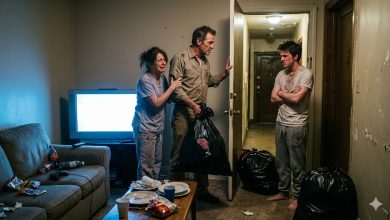
My daughter-in-law phoned me to tell me my son was dead and that I would not get a single cent.
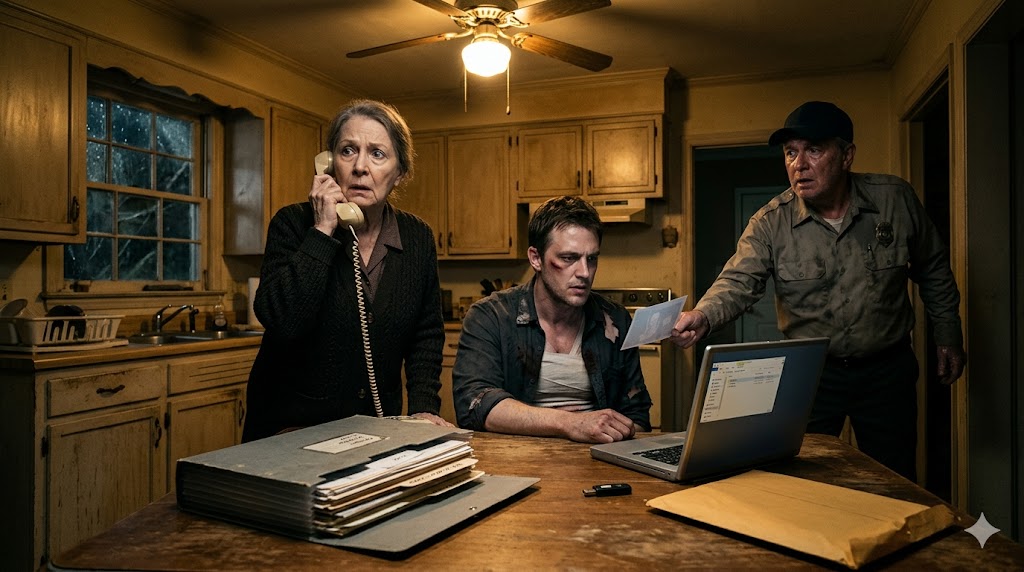
My daughter-in-law called to tell me my son was dead and that I wouldn’t get a single penny. I just smiled, because at that exact moment, my son was sitting right next to me—alive, breathing, and listening to every single word.
Beatrice spoke with the voice of a grieving widow. Julian squeezed my hand under the table. And when she said, “He won’t be a nuisance anymore,” I knew the trap that had almost killed him had just snapped shut on her instead.
“Helen,” Beatrice sighed over the phone. “I have some difficult news.”
I looked at my son. He was pale. Bandages wrapped around his chest. A broken rib. A dark bruise on his jaw. But he was alive. More alive than ever.
“What happened?” I asked, feigning a trembling voice.
Beatrice sobbed. She sobbed beautifully—like a high-society actress at an expensive funeral.
“Julian passed away this morning. It was a heart attack. The doctors couldn’t do anything.”
My son closed his eyes. Not from pain, but from pure rage.
Two days earlier, he had arrived at my house in Savannah, Georgia, barefoot, soaked, with blood staining his shirt, and a single sentence on his lips: “Mom, Beatrice tried to kill me.”
I nearly collapsed when I saw him. My Julian. My only son. The one everyone thought lived a perfect life in New York City: an elegant wife, a family business, a luxury apartment in Manhattan, picture-perfect smiles, and lavish dinners.
It was all a lie. His perfect life was nothing but a gilded cage. Beatrice controlled his phones, his accounts, his meetings, and even his medications. And when Julian discovered suspicious wire transfers, new insurance policies, and documents forged with his signature, her tenderness turned to pure venom.
“She put something in my tea,” he told me that dawn. “Later, I overheard her brother saying the death certificate needed to be issued quickly.”
But Julian didn’t die. An old driver from the company, Marcus, smuggled him out before they could finish him off. And now, Beatrice was calling me to bury him a second time.
“Oh, Helen,” she continued. “I know this is hard, but there’s something you need to understand.”
“Tell me, sweetheart.” The word sweetheart tasted like ash in my mouth.
Beatrice’s tone shifted. The crying stopped. “Julian left everything settled. The house, the stocks, the accounts… everything stays with me. You have no right to anything.”
There it was. She wasn’t calling out of grief; she was calling for the money.
My son opened his eyes. I put the phone on speaker. Beatrice had no idea her dead husband was listening.
“I don’t want any trouble,” I said softly. “I just want to say goodbye to my son.”
There was a short, uncomfortable silence on the other end. “That’s not possible.”
“What do you mean it’s not possible?”
“The body is being cremated today. It was his wish.”
Julian gritted his teeth. Cremated. Of course. No body meant no signs of abuse, no traces of poison, and no questions asked.
“But I am his mother,” I said.
Beatrice sighed, sounding annoyed. “Which is precisely why I’m asking you to show some dignity. Don’t make a scene. Julian is gone, and with all due respect, you were always a burden to him.”
A burden. Me. The woman who sold homemade pies on the riverfront to pay for his college. Me, who pawned my wedding earrings when his first business went under. Me, who co-signed the loan so he could build the very company Beatrice was now trying to steal.
I looked at my son. Tears welled up in his eyes. Not for himself, but for me.
“I understand,” I whispered.
Beatrice thought she had broken me. She was wrong. I had been broken since the moment my battered son showed up at my doorstep. All that was left now was a razor-sharp edge.
“Furthermore,” she added, “my lawyer will be at your house tomorrow morning to pick up some documents Julian left with you.”
I smiled. There was the real fear. The documents.
The gray folder Julian had sent me a month prior with a note: “Mom, if anything happens to me, do not give this to Beatrice.” Inside were bank statements, insurance policies, audio recordings, a copy of his old will, and photos of forged signatures. There was also something worse: a video. But we hadn’t opened that file yet.
“What documents?” I asked.
Beatrice’s breathing grew heavy. “Don’t play dumb, Helen. You know what I mean. Julian was overly sentimental. He kept useless junk at your place.”
Junk. That’s what she called the evidence.
“I’ll look for them,” I said.
“Don’t touch them too much. My lawyer will handle it.”
“Of course.”
“And one more thing.” Her voice turned ice-cold. Her real voice. “Don’t come to the city. Don’t call the hospitals. Don’t talk to the employees. Don’t go to the press. You’re getting old, Helen. At your age, any sudden shock could be dangerous.”
A threat. My son started to speak, but I covered his mouth with my hand.
“Thank you for letting me know, Beatrice.”
“Get some rest,” she said. “After all, Julian is finally resting too.”
She hung up.
The kitchen fell dead silent. Outside, a street vendor’s distant call echoed through the warm air, and the old ceiling fan slowly whirred overhead. My son dropped his head into his bandaged hands.
“Mom…”
“No.”
I stood up, opened the drawer where I kept my embroidered linens, and pulled out the gray folder. Then I went to the pantry, moved the coffee container aside, and retrieved a plastic-wrapped USB drive.
Julian stared at it. “What is that?”
“What your father left me before he died.”
My late husband, Arthur, had never trusted Beatrice. He used to say that girl smiled with her teeth but bit with her eyes. Three weeks before his own fatal heart attack, he handed me that drive and said: “Helen, if Julian ever wakes up too late, this might save him.”
I had never opened it. Out of fear, out of love, and out of the belief that a mother shouldn’t interfere in her son’s marriage. How foolish I had been.
We plugged the drive into my old laptop. There was only one folder, labeled: “BEATRICE”.
Inside were several videos. The first was security footage from Julian’s office. It showed Beatrice entering late at night with her brother. They were rummaging through drawers, stealing papers, and laughing. The second video showed her lawyer sliding documents under Julian’s hand while he was heavily medicated and asleep.
But the third video… the third one made our breath catch in our throats.
Beatrice was in the kitchen of her Manhattan apartment, talking on the phone. Believing she was completely alone, she said: “When Julian dies, his mother won’t be an issue. The old woman doesn’t even know the company is still entirely in her name.”
My son spun toward me. “What?”
I didn’t understand either. Or maybe, I just hadn’t wanted to.
Right then, there was a knock at the door. Three sharp raps.
Marcus, the old driver, walked in wearing a low-brimmed cap, sweating, holding a manila envelope.
“Helen,” he said, breathless. “I just came from the private hospital.”
Julian forced himself up despite the pain. “What happened?”
Marcus dropped the envelope onto the table. “Beatrice just presented a corpse claiming it’s you, boss. She already signed the cremation authorization.”
My blood ran cold. “A corpse? Whose corpse?”
Marcus swallowed hard. “I don’t know. But the receiving doctor noticed something strange on the dead man’s wrist… and he smuggled this photo out for you to see before they burn the evidence.”
He opened the envelope and pulled out a photograph. Julian looked at it. I looked at it too. And my son—the man who had just survived his own murder—turned ghostly white as he recognized the tattoo on the dead man’s skin.
Part 2
The tattoo was a serpent coiled around a cross, right on the left wrist. Julian gripped the edge of the table to keep his balance.
“It’s Thomas,” he whispered. “Beatrice’s brother.”
Marcus nodded grimly. “That’s what I figured, boss. I saw him plenty of times when he came to the office begging for money.”
The kitchen turned to ice. Beatrice wasn’t just trying to cremate a fake body to erase the evidence of Julian’s murder; she was burning the corpse of her own brother. And if Thomas was dead, it meant her scheme had spun completely out of control.
Julian wanted to leave for New York immediately, but he could barely breathe without doubling over in agony. I forced him back into his chair.
“You aren’t going anywhere in this condition.”
Marcus pulled another paper from the envelope: a copy of the cremation form signed by Beatrice, bearing Julian’s full name, alongside a medical authorization citing a “fatal myocardial infarction.” Everything was clean, swift, and entirely too perfect.
Then, we opened the fourth video on the USB drive. My husband, Arthur, appeared on the screen, sitting in his old office. He looked tired, older than I remembered, but his voice was steady:
“Helen, if you’re watching this, it’s because Beatrice has finally shown her fangs. The company isn’t in Julian’s name. It never was. I put it entirely in your name when I discovered that woman was trying to marry the business, not our son.”
I felt my knees weaken. For years, I believed the company belonged to Julian because he ran it, because everyone called him the boss, and because I never understood paperwork or notary legalese.
But Arthur kept speaking from the screen:
“Beatrice has been forging signatures, changing beneficiaries, and moving insurance policies. Thomas is helping her. If Julian wakes up too late, find Marcus. And do not hand over the gray folder. The real will is in there.”
Julian looked at me, his eyes filled with immense guilt. “Mom, I didn’t know.”
“Of course you didn’t, sweetheart,” I replied. “They were drugging you in your own home.”
We immediately called my husband’s trusted attorney, Mr. Vance, who arrived two hours later from Atlanta. He reviewed the videos, inspected the gray folder, and wasted no time on empty condolences.
“Helen, Beatrice wants two things: to cremate that body to legally close the book on Julian’s ‘death,’ and to retrieve these documents before you realize you legally hold the power to stop her. If the company is still in your name, she cannot sell or transfer a single share without you.”
Julian balled his fists. “And what about Thomas?”
The lawyer lowered his voice. “If that corpse belongs to Thomas, then Beatrice is also erasing the only accomplice who could have sent her to prison.”
That night, we did the exact opposite of what Beatrice had commanded. We didn’t stay quiet. Mr. Vance contacted the federal authorities, Marcus handed over the photograph of the corpse, and I recorded a formal statement detailing dates, times, and all the evidence laid out on the table.
The following morning, Beatrice’s lawyer arrived at my house with a somber funeral face and an expensive briefcase.
“Helen,” he said smoothly, stepping inside. “I’m here to collect a few of your son’s sentimental belongings.”
I let him into the living room. Julian was hidden in the bedroom—alive, breathing, and listening. The lawyer slid a document in front of me. “Just sign here to release the folder. It’s pure formality.”
I took the paper, put on my reading glasses, and smiled like a compliant old woman. “Son, before I sign, I want to show you something.”
I turned on the laptop and played the video of him sliding documents under a heavily sedated Julian’s hand. The lawyer’s face drained of color, turning as white as a freshly painted wall.
“This is completely out of context,” he stammered.
“Don’t worry,” I replied calmly. “People who understand contexts much better than I do are already on their way.”
Right on cue, there was a knock at the door. This time, it wasn’t three quiet raps. It was the police. The lawyer tried to bolt, but Marcus stepped out from behind the hallway and blocked his path.
When the federal agents entered, Julian walked out of the bedroom. The lawyer nearly fainted. Seeing a dead man walking tends to have that effect on cowards.
“Good morning,” my son said, his voice raspy but resolute. “I was told I was scheduled to be cremated today.”
The lawyer broke into a cold sweat, unable to utter a coherent word. His silence was more than enough for the agents to issue an emergency order halting the cremation in New York. Two hours later, confirmation arrived: the fingerprints of the corpse didn’t match Julian’s. And the left wrist bore the serpent tattoo belonging to Thomas, Beatrice’s brother.
Beatrice called the moment she found out the cremation had been intercepted. I answered on speakerphone, with Julian, Marcus, Mr. Vance, and the law enforcement agents standing around me.
“Helen,” she said, using that artificial voice of a grieving widow. “Don’t make this tragedy more difficult than it already is. Just hand over the documents.”
I took a deep breath. “Beatrice, dear… who exactly are you burning over there, considering my son is sitting right next to me?”
There was no crying on the other end. No gasp of surprise. Just a long, dead silence. Then, she spoke in her true, chilling voice: “You just signed your own death warrant, old woman.”
Julian closed his eyes. I kept mine wide open. I had buried enough fear in my lifetime.
“No, Beatrice,” I answered. “You’re the one who just confessed in front of federal agents.”
She hung up.
Part 3
Beatrice fell two days later. She didn’t go down crying like a widow; she went down screaming like a CEO whose vault had just been locked shut. They tracked her down to a safe house in New Jersey with a stash of jewelry, fake passports, stock transfer contracts, multiple life insurance policies, and a duffel bag stuffed with cash.
She claimed Thomas had died in a tragic accident, that she was merely trying to “avoid a public scandal,” that Julian had a weak heart, and that I—a simple old woman from Georgia—was being manipulated by greedy lawyers. But the hospital security footage, Arthur’s videos, the forged signatures, and the recorded phone call where she threatened my life spoke loud and clear.
The full truth was far more sinister than we had imagined. Thomas had been helping Beatrice alter Julian’s medications, forge authorizations, and skim money from the company. But when Thomas believed Julian was finally dead, his greed got the better of him. He threatened to blackmail her, demanding a larger cut and threatening to reveal that Julian’s “heart attack” had been deliberately induced.
Beatrice didn’t tolerate liabilities. She poisoned her own brother and checked him into the hospital under Julian’s name, attempting to incinerate two problems in a single afternoon: eliminating her blackmailer and legally finalizing her husband’s death. Some people have no bottom to their cruelty. Beatrice didn’t even have a soul.
It took Julian months to physically recover. Not just from the blunt force trauma, but from the slow-acting poison she had been slipping into his food under the guise of vitamins and sedatives. But the emotional recovery took much longer. He struggled to accept that he had slept for years next to a woman who studied him like a thief sizing up a combination lock. She monitored his phones, his accounts, his meals, and his schedule. She had built a cage so elegant that from the outside, it looked like a perfect marriage.
Marcus wept tears of joy when Julian walked back into the corporate office for the first time. The employees stood in silence—not out of fear, but out of absolute shame for believing the news of his death without ever asking a single question.
I also had to learn to live with a new truth: the company remained in my name because Arthur had protected me without ever explaining why. At first, I felt a surge of anger. I felt he had treated me like a woman incapable of understanding business. But after watching his video in its entirety, I understood it wasn’t disdain; it was profound fear. He had seen what Beatrice was capable of long before anyone else did, and he left a hidden escape hatch in case Julian woke up too late. It pained me that I hadn’t opened that USB drive sooner. It pained me to think things might have been different. But guilt, when it doesn’t belong to you, can become its own kind of prison.
Beatrice was prosecuted and convicted of attempted murder, forgery, grand larceny, fraud, and crimes related to the death of Thomas. Her legal team attempted to negotiate a plea deal, but Julian flatly refused.
“I don’t want revenge,” he stated firmly before the judge. “I just want the next person who smiles like that at a family to know that the law can protect the living just as well as it honors the dead.”
I listened from the gallery, clutching my knit shawl tightly, thinking of the boy I had raised by selling pies on the riverfront—now standing tall, trembling, but undeniably alive.
We sold the Manhattan apartment. Julian refused to ever step foot in the place where he was almost murdered. He stayed with me for a long time in Savannah, in the same warm house he had run to barefoot and bleeding. In the beginning, he would wake up screaming in the dead of night. But eventually, he began waking up early with me, helping me bake, and taking slow walks along the historic avenues.
One morning, he looked at me and said, “Mom, please forgive me for not seeing how Beatrice treated you.”
I answered with the only thing a mother can say when she, too, is learning to heal: “Forgive yourself for surviving, son. We’ll handle the rest together.”
The company underwent a massive forensic audit. We uncovered mountains of debt, fraudulent contracts, and a handful of corrupt employees loyal to Beatrice who vanished the moment their under-the-table checks stopped clearing. But we also discovered good, honorable people: Marcus, the accountant who secretly kept duplicate ledgers, and the doctor who had the courage to photograph the corpse’s wrist before the cremation. Sometimes, a life isn’t saved by a grand hero, but by a handful of ordinary people who simply refuse to look away at the exact moment it matters.
Today, Julian is alive. Saying those words out loud still feels like a miracle. He no longer wears a wedding ring. He never drinks tea unless he brews it himself. He never signs a piece of paper without reading it three times over.
And I, at my advanced age, have learned how to read bank statements, corporate bylaws, insurance policies, and legal trusts. Because a mother’s love might grow old, but it never becomes useless. Sometimes, it becomes more dangerous, more patient, and entirely capable of smiling over the telephone while someone on the other end mistakenly believes they’ve already won.
I learned a lesson I will carry to my grave: not every public display of grief is real, not every widow is sorrowful, and not all in-laws marry into a family to add to its love. There are people who don’t wait for you to die; they bury you slowly, piece by piece, with paperwork, medications, lies, and forged signatures.
But I also learned that a mother doesn’t need youth or corporate power to defend her child. Sometimes, all it takes is a gray folder, a USB drive she was once too afraid to open, and the strength to answer a phone call, listening to a killer celebrate far too soon. Because as long as a mother is still breathing, no child of hers is ever truly alone against those who try to erase them.