Part 2: “The Empty Hospital Chair That Turned My Children Into Strangers—Until I Made Them Face the Cost of Every Forgotten Day”
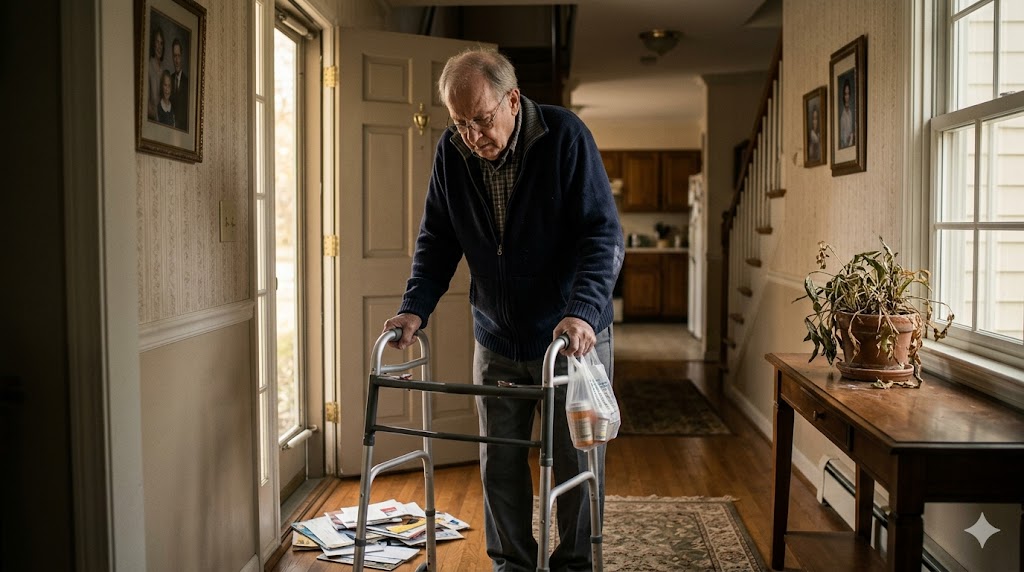
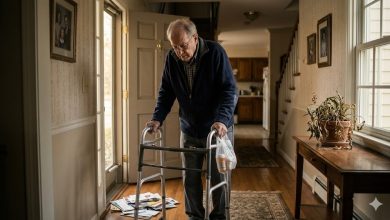
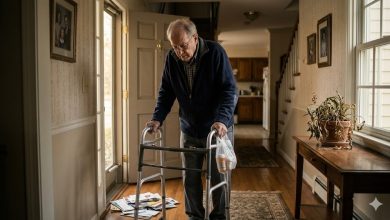
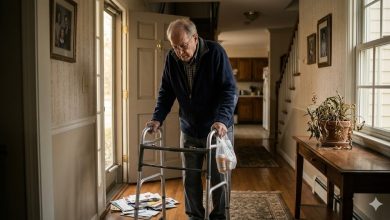
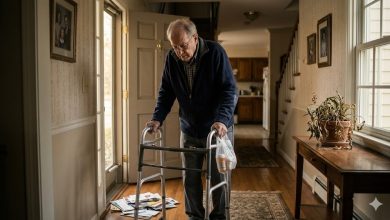
My three children promised they would visit me after my surgery. “We will take turns staying with you,” they said. On the first day, nobody came. On the second day, nobody came. By the seventh day, the nurse looked at the empty blue chair next to my bed and softly asked if I had any family. On the thirteenth day, I left the hospital with a walker, a small bag of medicine, and no one waiting for me outside the doors. I took an Uber home.
When I opened my front door, the house told me the truth before my children could say a word.
My name is Albert Walker.
I am seventy-eight years old, and I have spent most of my life building things that were meant to last.
Water heaters.
Roof frames.
Engine parts.
Kitchen floors.
And a long time ago, bridges.
Things that had to stay strong under heavy weight, bad weather, and time.
I thought I understood weight.
Then I had my surgery.
Six weeks before the operation, I told all three of my children the date. Six full weeks. Forty-two days. That was enough time to mark a calendar, change one appointment, ask for days off work, or drive down the highway to Bowling Green to sit next to their father before the doctors put me to sleep.
Raymond, my oldest, said, “Dad, don’t worry. We will all be there.”
Bella left a long voicemail full of promises, repeating “of course, Dad” so many times that it almost sounded like a real plan.
Nora called three weeks before the surgery while I was making lunch. She asked how I was feeling.
I told her I was nervous.
Then she asked if I could give her money for rent.
I said yes.
I always said yes.
On the morning of the surgery, my house on Sycamore Lane was quiet in the special way a big house gets quiet when only one person lives inside it. I made coffee that I was not allowed to drink. I sat near the window and looked out at the trees.
And I thought to myself, if something goes wrong today, the last thing my youngest child asked me for was money.
Then I ordered a ride to the hospital.
The doctor told me the operation was normal and safe.
People like to use that word when it is not their own body on the table.
When I woke up, there was pain, bright hospital lights, a nurse checking my body, and a blue vinyl chair next to the bed.
It was empty.
I told myself they would come later.
On the first day, nobody came.
On the second day, Raymond called. He asked how I was feeling. Then, right before he hung up, he casually said I should probably organize my money documents “at some point.”
I looked at the empty chair.
On the third day, Bella called. She said she felt terrible. Work was too busy. The kids had school events. Her husband had a work meeting. Something had come up, but she was definitely coming soon.
On the fourth day, the chair stayed empty.
On the fifth day, Raymond called again.
On the sixth day, Bella promised again.
Nora did not call at all.
By the seventh day, I knew every single detail of that chair.
Blue vinyl material.
One crooked front leg.
Placed a little too close to the bed, as if someone had pulled it there for a visitor who was already on the way.
Nurse Gloria came in that afternoon. She was the kind of woman who had seen enough of life to know that empty chairs are not always just pieces of furniture.
She checked my blood pressure.
She looked at the chair.
Then she looked at me and asked softly, “Do you have family, Mr. Walker?”
I smiled.
That smile was very hard for me to give.
“Yes,” I said.
She nodded slowly, squeezed my hand once, and told me to press the call button whenever I needed anything.
Nobody came on the eighth day.
Nobody came on the ninth day.
Bella sent a text message saying she was sorry, something had happened, and she would explain it all soon.
I did not ask for her explanation.
On the tenth day, the chair stayed empty.
On the eleventh day, I stopped looking at the door.
On the twelfth day, I understood something I had spent seventy-eight years trying not to understand.
Love can exist and still fail to show up when you need it.
On the thirteenth day, the doctor signed my papers to leave. A volunteer wheeled me to the front doors because the hospital rules required it. Outside, cars pulled up for other patients. Doors opened. Families leaned out. Hands reached to help with bags, coats, and walkers.
I ordered an Uber.
The driver was a young man named Tyler. He helped me carry my bag to my front porch and asked if I would be okay getting inside.
I thanked him.
Then I stood in front of my own door for a moment, looking at the brass handle I had replaced twice and the crack in the wood panel that I had been meaning to fix for a long time.
When I stepped inside, the house was exactly how I had left it thirteen days ago.
The mail was piled up on the floor.
The plant by the kitchen window was dry and dying.
The air felt completely still, like no one had been there.
That might sound simple, but it is not.
When you live alone and come home after thirteen days in the hospital, and everything is exactly where you left it, it means nobody came.
Not to pick up the mail.
Not to water the plant.
Not to stand in your kitchen and remember that you exist.
I put the bag of medicine on the counter.
I made some tea.
Then I sat in my chair by the window, the one with the worn-out right armrest where my elbow had rested for thirty years.
I thought about the blue vinyl chair in room 114.
I thought about Gloria’s hand holding mine.
I thought about their promise:
“We will take turns staying with you.”
Then I picked up the phone.
I did not call Raymond.
I did not call Bella.
I did not call Nora.
I called Michael Simmons, my lawyer of twenty-six years.
Michael is a patient man. Careful. Exact. The kind of man who understands that the most important structures are not always the ones people can see from the outside.
He listened while I told him what I wanted to do.
When I finished speaking, he was completely silent.
“Albert,” he said, “are you sure about this?”
I looked out at the yard, at the rose bushes along the fence, at the wooden bench I built with my own hands twenty years ago.
“I have been sure since the seventh day,” I said.
Six weeks later, I invited all three of my children to my house for dinner.
Raymond arrived first with a bottle of red wine and a smile that looked at the expensive woodwork on the ceiling before it actually looked at my face.
Bella came with a pie she bought from the store and a lot of apologies mixed with excuses.
Nora arrived thirty-eight minutes late and did not talk about the hospital at all.
I made cornbread from scratch.
I put on some quiet jazz music.
I set the table like a father who was happy to see his children.
And I was happy.
That is the part people often get wrong.
You can love your children and still learn a lesson from them.
You can pass the cornbread and still remember the empty chair.
Halfway through dinner, I put my fork down.
“Since the surgery,” I said, “I have been thinking it is time to organize my final legal papers.”
The feeling at the table changed.
Not loudly.
Not with a big drama.
But I am an engineer.
I notice when the weight shifts.
Raymond sat up a little straighter.
Bella’s smile became tight and fake.
Nora finally stopped looking at her plate and looked up at me.
Raymond said carefully, “That sounds like a good idea, Dad.”
Bella nodded. “Of course. Very responsible of you.”
I smiled and asked if anyone wanted more cornbread.
They had no idea that Michael had already written up the new documents.
They had no idea that the house on Sycamore Lane, the rose bushes, the wood floors, the shelves I built myself, and every single paper in my office had already been weighed against thirteen days of complete silence.
They thought they were having dinner with an old man who had forgotten what an empty hospital room feels like.
But I had not forgotten.
I had simply stopped showing my reaction.
And when Michael opened that folder, every promise they failed to keep was about to change everything.
I cleared my throat and leaned back a little bit in my chair, looking closely at the three faces in front of me.
“Since the surgery,” I said slowly, keeping my voice steady, “I have realized that love is not just words. It is actions. And thirteen days of empty promises have results.”
Raymond moved uncomfortably in his seat, holding his napkin tightly like he was scared. Bella’s fingers moved nervously against her plate, and Nora looked out the window, acting like she wanted to run away into the dark.
I opened the folder. The first things they saw were the hospital records, the notes from the nurses, and copies of the text messages they had sent—or forgot to send—while I was sick. Every single day was written down, and every promise was marked.
“I wrote everything down,” I said. “Every call you missed, every excuse you made, every single time you chose your own schedule over your family. Every day you ignored your father was recorded.”
Bella’s voice shook. “Dad… it was not that bad—”
“It was exactly that bad,” I said, stopping her from speaking. “Do you know what it feels like to be alive and feel like you do not exist? To wait in a hospital bed while the workers ask if you have any family, while my own children do nothing?”
I pulled out the next group of papers: a record of the money I had saved for them over the years. Every bit of money I gave them for school activities, every college payment, every single gift. I put it on the table so the light from the window shone right on it.
“You all wanted to judge me by how much money I made. By my old clothes. By my job at the auto repair shop. But what you did not realize,” I said, holding up the record book, “is that while you were counting dollars, I was counting how many times love was missing.”
The room became totally quiet. Even the sound of forks on the plates felt loud.
Raymond’s face turned completely white. Bella pressed her lips together tightly. Nora finally looked directly into my eyes.
“I have already planned for what happens next,” I said. “The house, the cars, the bank accounts—they will now be given out based on who has shown real care and responsibility. Starting today, you no longer get things for free while ignoring me, and the real cost of family care begins.”
Their mouths opened, and they all tried to talk at the same time.
“Dad, wait, you cannot do this—”
“I can,” I said strongly. “And I will. Because being a parent is not just about blood. It is about showing it through your actions. And I now have proof that you forgot how to be good children to your father.”
I let the words stay in the air. I did not yell. I did not hit the table. My quiet voice felt heavier than a tool. It pressed down on the air between us.
I expected them to cry. I expected them to make excuses. I did not expect them to understand. I expected nothing from them. And yet, finally, they are learning the heavy weight of the empty space they left behind.
The folder stayed open on the table. My children sat completely frozen. And I knew, with total certainty, that for the first time in many years, the power in that house had completely changed.
Tonight, the blue vinyl chair in my hospital room was no longer just a piece of furniture. It was a symbol. A warning. And a lesson they had to learn.