PART 2: THE SOBBING WASN’T COMING FROM A TELEVISION…
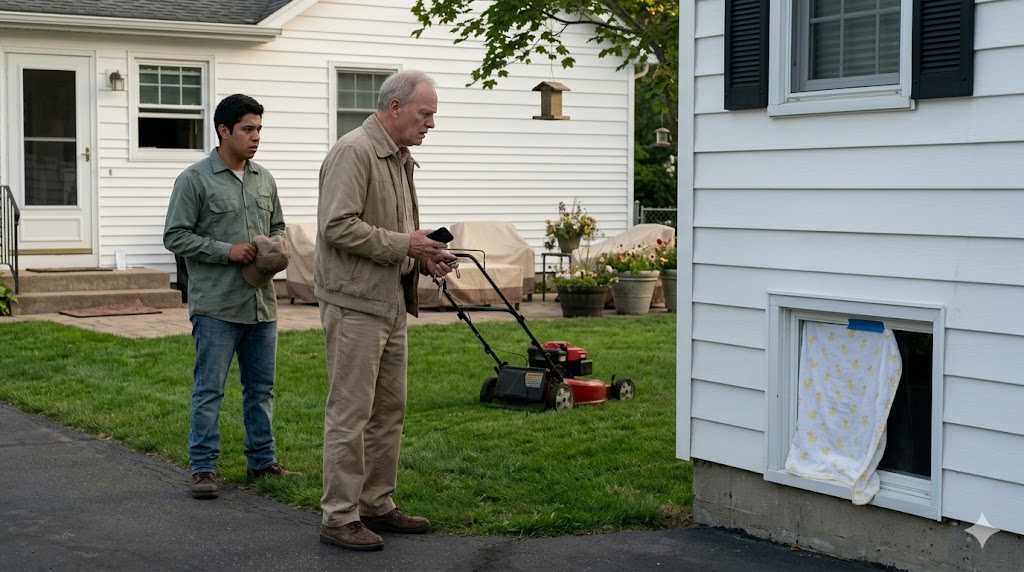
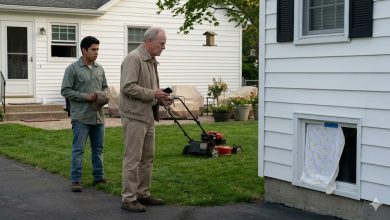
I hired a guy to mow the lawn while my daughter was out of town. About an hour later, my phone rang. His voice was low, almost shaking. “Sir… is anyone else supposed to be inside the house right now?” I froze. “What do you mean?” He paused, and for a second all I could hear was the mower idling in the background. Then he whispered, “I keep hearing someone crying… and it’s coming from the basement. That’s not a TV.”
For a moment, the whole kitchen seemed to tilt around me.
My coffee sat untouched beside the sink, steam thinning into the morning light. Outside, the maple trees along Ashford Lane shifted in a soft wind, and the mower droned in uneven circles across the front yard. It was the kind of ordinary suburban morning I had trusted for years, the kind that made a man believe his life was finally quiet enough to stop hurting.
Gary Thompson stood near the basement window with one hand pressed to his ear and the other gripping his phone. I could see him from the kitchen, his ball cap pulled low, his work gloves tucked into the back pocket of his jeans. Gary had cut my grass every Tuesday for six years. He was practical, punctual, and not the type to make up strange sounds coming from someone’s house.
“Stay right there,” I told him.
My voice sounded calm. Thirty-two years flying commercial planes had trained that into me. When something went wrong at thirty-seven thousand feet, fear had to wait behind procedure. You checked the instruments. You confirmed the signal. You did not panic until panic became useful.
But as I set the mug down, my fingers felt numb.
The basement door was beside the pantry, painted the same white as the kitchen cabinets. I had walked through it thousands of times without thinking. Today, the knob felt cold in my palm.
I opened it and looked down the stairs.
Sixteen steps. Pine railing. Old carpet runner. A faint smell of dust, metal, and the lavender soap my oldest daughter Cassandra kept near her jewelry sink.
The house was supposed to be empty except for me.
Cassandra had left at seven that morning for a downtown client meeting. She had kissed my cheek, reminded me to take my vitamins, and walked out in a navy blazer with her leather portfolio under one arm. My Seattle flight was not until midafternoon. I had planned to pack, check the weather, and maybe call my friend Steven about golf.
Instead, I stood at the top of the basement stairs listening for someone who should not exist.
Halfway down, the house creaked around me. Old houses do that. Margaret used to say this one had moods. She had loved its wide porch, its narrow hallway, the kitchen window over the sink where sunlight fell across her herb pots. We bought it twenty-three years earlier, when Cassandra was nine and Felicia was four, back when both girls ran barefoot through the living room and left crayons in the sofa cushions.
Margaret had been gone ten years.
Felicia had been gone eight.
And Cassandra was all I had left.
At the bottom of the stairs, I stood still and listened.
Nothing.
Only the furnace humming behind its metal door and the faint electric buzz of the lights. The basement had once been a mess of storage bins, holiday wreaths, and Margaret’s old sewing boxes. Five years ago, Cassandra turned the far end into a jewelry studio. I had helped her paint the walls dove gray, install shelves, and mount track lighting above her workbench. She said the basement made her feel grounded, closer to the house, closer to her mother.
I opened the studio door.
Everything looked exactly as it always did.
Her long worktable stood in the center of the room, tools arranged in perfect order on a rolling mat. Pliers. Cutters. Tiny files. Silver wire coiled in glass jars. A velvet display tray held a row of pendants under the warm light. The pieces were beautiful, delicate vines and birds and small moons engraved with such precision that clients drove in from Chicago to buy them.
Cassandra had built a name for herself with that work. She called it grief transformed into beauty.
I had believed her.
Then I saw the glass.
It sat near the small sink in the corner, half full of water, condensation still clinging to the sides. I touched it with two fingers. Cold.
Cassandra had been gone almost an hour.
The faucet handle was damp. A folded hand towel hung crookedly over the sink, and the lavender scent in the room was too fresh to belong to last night.
I turned slowly.
The back wall looked normal at first. Same gray paint. Same neat line where the baseboard met the floor. But when the light hit it from the side, I noticed the texture. The paint there was smoother than the rest, almost too even, like a patch blended by someone who knew exactly how to hide repairs from a casual eye.
I walked to it and knocked.
The sound came back hollow.
Not the dense thud of foundation. Hollow.
“Mr. Hayes?”
I turned sharply.
Gary stood in the doorway at the foot of the stairs, his gloves twisted in both hands. His face had gone pale under the brim of his cap.
“I didn’t mean to come in without asking,” he said. “But you didn’t answer when I called down.”
“It’s all right.”
He glanced toward the back wall. “Did you hear anything?”
“No.”
He swallowed. “I know what I heard.”
I wanted to tell him sound carries strangely through old houses. I wanted to blame the vents, the neighbor’s television, a phone left playing somewhere. I wanted anything but the look on his face.
“What exactly did it sound like?” I asked.
“A woman crying,” he said quietly. “Not loud. Not like a movie. More like she was trying not to be heard.”
The words moved through me with a cold, slow precision.
Before I could answer, a car door shut outside.
Heels clicked above us.
Cassandra.
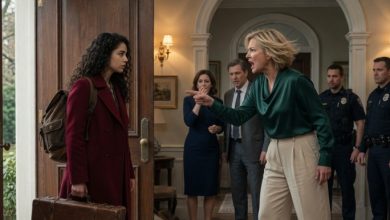
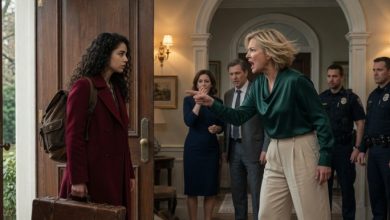
She appeared at the top of the stairs a moment later, framed by kitchen light. Her eyes moved from Gary to me to the open studio door. Surprise crossed her face, then vanished behind a smile so practiced it made my stomach tighten.
“Dad?” she said. “Gary? What’s going on?”
“Gary heard something from the basement windows,” I said.
Gary cleared his throat. “Crying, ma’am. I thought I should call.”
Cassandra laughed softly. Not too loud. Just enough to make the concern in the room seem slightly embarrassing. “Oh, goodness. That was probably my podcast. I worked late last night and had one of those emotional interview shows playing while I cleaned up. I must have left it on a timer.”
Gary’s shoulders eased. “That could be it.”
“It’s sweet of you to check,” she said, touching his arm briefly. “I’m sorry you got worried.”
“What brought you back?” I asked.
Her smile held, but something flickered behind it. “Forgot my presentation portfolio. Big commission. Red leather binder, shelf by the window.”
“I’ll grab it.”
The flicker sharpened.
“Dad, I can get it.”
“I’m already here.”
I walked into the studio, picked up the red leather portfolio, and handed it to her. Her fingers closed around it a little too quickly.
From the kitchen window, I watched her Audi back out of the driveway and roll down Ashford Lane as if nothing in the world had changed.
Gary returned to the mower.
I returned to the basement.
The studio looked different now because I was different.
The water glass was still cold. The soap scent was still fresh. The wall was still hollow. And Cassandra’s explanation, smooth as it had been, did not fit the room. She had always been good at making lies sound like hospitality. Good at softening edges until a person felt rude for noticing them.
I stood in front of that wall for a long time.
Then my phone buzzed.
Cassandra: Thanks for covering, Dad. Love you.
Covering.
I stared at the word until it stopped looking like English.
I typed back, Love you too.
But I did not believe the message anymore.
That night, sleep came nowhere near me.
The bedroom ceiling above my face held the faint reflection of streetlight through the blinds. The clock changed from 11:47 to 12:30 to 1:15. Outside, the trees rustled along the street. In the old days, after a long rotation, that sound would have put me under in minutes. That night, it made the house feel awake.
At 2:15, I heard the basement stair creak.
Not the house settling. Not pipes. A footstep.
I sat up in bed.
Another creak came, softer this time, like someone putting weight on the side of the step that made less noise.
My first instinct was to call Cassandra’s name.
I did not.
Instead, I sat in the dark and hated myself for being afraid of my own daughter.
Margaret would have gone downstairs. Margaret would have known. She had always read our girls better than I could read a cockpit panel. When Cassandra was seven and lied about breaking the living room lamp, Margaret knew before the second sentence. When Felicia was sixteen and sneaked back through her bedroom window after midnight, Margaret was waiting in the kitchen with tea and disappointment.
Take care of our girls, Margaret had told me in the final weeks, her hand small and dry in mine. Promise me, Chris.
I promised.
God help me, I promised.
But in the dark, listening to the old house breathe around me, I had to wonder what kind of father needed a landscaper to hear his child crying beneath his feet.
Felicia had been nineteen when she disappeared.
March 15, eight years earlier. She had walked out after dinner with her keys in one hand and her phone in the other.
“Meeting Sophie for coffee,” she called from the hallway.
“Drive safe,” I said, barely looking up from my laptop. “You’ve got that design meeting tomorrow.”
“I know. Love you.”
“Love you too.”
Those were the last ordinary words I ever gave her.
By morning, her bed had not been slept in. Her phone went straight to voicemail. Her best friend Sophie had not seen her. The city records showed no card activity, no travel, no hospital admission. Cassandra cried beside me while we printed flyers. She called Felicia’s friends. She organized search posts online. She sat at the kitchen table with red eyes and said maybe Felicia needed space.
Maybe she took that New York opportunity early, Dad. You know Felicia. She hates goodbyes.
I had wanted to believe my daughter had left because leaving hurt less than imagining anything worse.
So I believed.
Over the years, small oddities had drifted past me like leaves in a flooded street. Grocery bills that doubled. Cassandra carrying trays downstairs after midnight. A muffled sound when I came home early from a trip. New drywall dust near the basement trash. Cassandra explaining each thing before I could fully ask.
Client events.
Late commissions.
New storage.
A private workspace.
Every answer reasonable. Every answer a brick in a wall I did not know I was helping build.
At three in the morning, I opened the notes app on my phone and began writing.
Tuesday, 7:34 a.m. Gary hears crying from basement.
Tuesday, 7:43 a.m. Cold water glass in studio.
Fresh paint on back wall.
Hollow sound behind wall.
Lavender soap recently used.
Three years ago, late basement sounds.
Two years ago, grocery bills increase.
One year ago, tray of food carried downstairs.
My hands shook as I typed.
Evidence first, emotion later.
It was something I had told young pilots for decades. When the sky goes wrong, you do not argue with fear. You collect facts.
By Thursday afternoon, I had enough fear to fill the house and not enough facts to survive it.
So I went through Cassandra’s papers.
She had left at noon for a gallery event downtown. I stood in the doorway of her home office, the room that used to be Margaret’s sewing room. Everything inside looked curated. Glass desk. White shelves. Design books arranged by color. A framed photo of Cassandra and me at her first gallery opening, her arm around my shoulder, both of us smiling like the past had not swallowed someone we loved.
The filing cabinet was not locked.
In the bottom drawer, I found an accordion folder labeled household grocery in Cassandra’s neat handwriting. Inside were receipts organized by month.
I spread them across the desk.
Target. Cub Foods. Costco. Amazon. Week after week. Canned soup. Rice. Pasta. Bottled water. Peanut butter. Multivitamins. Toothpaste. Shampoo. Sketch pads. Paperback novels. Women’s clothing, size small.
Cassandra wore a medium. Cassandra ate most dinners with clients. Cassandra did not read mysteries or use cheap sketch pencils. Cassandra had once told me drawing was “Felicia’s thing.”
Then I found the monthly personal items.
The same purchase, again and again.
I sat down hard.
Someone else was living in this house.
Someone who needed food that lasted, toiletries no guest ever saw, books to pass time, sketch pads to stay sane.
Someone small.
Someone like Felicia.
I photographed everything, hands trembling as I worked down the piles. When Cassandra’s car pulled into the driveway at 5:47, I had put every receipt back exactly where I found it and started dinner.
Chicken Marsala. Her favorite.
The kitchen smelled warm and safe. That made it worse.
Cassandra came in glowing. “Dad, you would not believe today. Three sales and Mrs. Peterson wants a custom anniversary piece.”
“That’s wonderful,” I said. “Tell me everything.”
She talked for twenty minutes. Clients, compliments, possible press coverage. I watched her face across the table and searched for the child I had taught to ride a bike, the little girl who cried when Margaret trimmed her bangs too short, the daughter who held my hand at Felicia’s memorial vigil even though there had been no body, no ending, no place to put our grief.
When she finally relaxed, I said, “You’ve been hosting clients here, right?”
Her fork paused for less than a second.
“Sometimes,” she said. “Why?”
“The grocery bills have gone up. I figured it was for private viewings.”
“Oh.” She smiled. “Yes, exactly. Wine, cheese, crackers. People expect an experience.”
“A lot of toiletries too.”
Her knuckles whitened around the fork.
“Dad,” she said lightly, “women come here. Emergencies happen. Good hospitality means being prepared.”
“Of course.”
We finished dinner like a normal father and daughter.
At nine, she kissed my cheek and went upstairs.
At nine-thirty, I went back to the basement.
The studio lights stayed off this time. I crossed the room with my phone flashlight angled low and placed my ear against the hollow wall.
At first, there was nothing.
Then I heard it.
Breathing.
Quick. Shallow. Terrified.
My chest closed.
“Felicia,” I whispered.
The breathing stopped.
For ten seconds, the whole world was silent.
“Felicia,” I whispered again. “If you can hear me—”
Above me, a floorboard creaked.
Cassandra’s bedroom door.
I stepped back from the wall, turned off the flashlight, and moved toward the stairs. Behind me, the breathing had started again, faster now, almost a sob trapped inside someone’s chest.
I wanted to tear the wall down with my hands.
Instead, I went upstairs and locked myself in my room.
The next day, Steven Harper called.
Steven was my oldest friend and the attorney who had helped Margaret and me set up the girls’ trusts. He was the kind of man who sounded calm even when delivering bad news, which was why the strain in his voice made me grip the phone harder.
“Chris,” he said. “You need to come to my office. It’s about Felicia’s trust.”
Twenty minutes later, I sat across from him on the twelfth floor of the IDS Tower, looking at bank statements spread across his desk.
“You remember Margaret’s insurance money,” Steven said. “Five hundred thousand set aside for Felicia. She was supposed to access it at twenty-one.”
“When she disappeared, I made Cassandra temporary trustee,” I said. “I thought it was safe.”
Steven slid a spreadsheet toward me.
“It wasn’t.”
The withdrawals began two weeks after Felicia vanished.
Fifty thousand dollars. Then another. Then another.
Debt repayment. Derek Hamilton.
The name took a moment to surface. Cassandra’s boyfriend from that time. Slick smile, expensive shoes, always looking over his shoulder as if trouble had his address.
“There’s more,” Steven said.
Payments to a contractor in Iowa. J. Morrison Construction. One hundred thousand dollars listed as home renovation.
My mouth went dry.
“We never renovated anything.”
“I checked city permits,” Steven said. “Nothing filed at your address.”
Other withdrawals followed. Food, supplies, operational expenses. Gallery startup. Investments under Cassandra’s name.
Margaret’s legacy had been drained piece by piece while I flew over cities, trusted my daughter, and slept above a room I had never known existed.
I told Steven everything. Gary. The glass. The wall. The breathing. The receipts.
He listened without interrupting. When I finished, his face had gone gray.
“Do not confront Cassandra alone,” he said.
“If Felicia is behind that wall—”
“Then Cassandra has kept control of this for eight years,” he said. “You cannot give her warning. You go home. You act normal. I’ll start tracing the money. We document everything.”
“Act normal,” I repeated.
He put copies of the statements into a folder and pushed it across the desk.
“Evidence first,” he said.
“Emotion later.”
I almost laughed when he used my own rule against me.
By Friday morning, the evidence came knocking.
Dorothy Green, my next-door neighbor, stood on my porch at 8:15 with a canvas tote pressed against her chest. Dorothy was seventy-two, widowed, and had been Margaret’s closest friend on the block. She used to bring casseroles after Margaret died and birthday cards for the girls long after they stopped expecting them.
That morning, she looked terrified.
“Mr. Hayes,” she said. “I should have told you years ago.”
I brought her inside.
She sat on the edge of the sofa and pulled three spiral notebooks from the tote. The covers were worn soft at the corners. Inside, every page was filled with dates, times, and careful handwriting.
March 15, 2017. 2:30 a.m. Cassandra exited basement with tray.
July 22, 2021. Heard faint crying from Hayes basement side. Lasted ten minutes.
October 3, 2023. Cassandra made three trips to basement carrying blankets, books, supplies.
My hands went cold as I turned page after page.
“I have insomnia,” Dorothy said, twisting a tissue between her fingers. “After Robert passed, I was up most nights. I saw things. Lights in your basement after midnight. Cassandra carrying bags. Sometimes dishes. Sometimes boxes.”
“You heard crying?”
Her eyes filled. “Yes.”
“Did you tell anyone?”
“I called once,” she whispered. “Years ago. Someone came by while you were away. Cassandra showed them the studio and explained she worked late. They left.”
Dorothy looked down at her lap.
“The next day, Cassandra came to my porch. She smiled the whole time. She said, ‘Mrs. Green, curiosity can disturb a peaceful neighborhood. I would hate for your life to become difficult over a misunderstanding.’ She never raised her voice. But I understood.”
I closed my eyes.
Dorothy pulled a USB drive from the tote.
“I installed a