Part 3: My daughter said I had only two options: obey her husband or get out of her home…
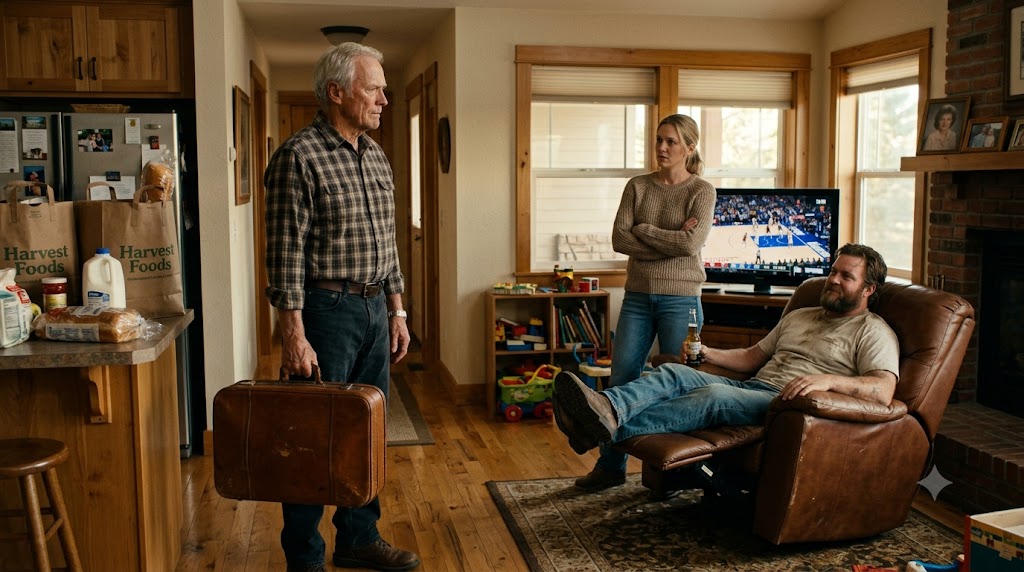
My daughter gave me two choices: serve her husband or leave her house. So I smiled, packed my bags, and walked out without a word. Seven days later, I woke up to twenty-two missed calls and one text message I never expected to see.
When my daughter told me to wait on her husband or get out, I didn’t yell. I didn’t argue. I didn’t slam any doors. And I didn’t remind her of all the bills I had paid for her, or the retirement money I spent to help them. I just smiled, picked up my suitcase, and left the home I spent my whole life paying for.
She thought I would give in like I always did. She expected me to apologize and do whatever her husband wanted just to keep the peace. But that Saturday afternoon, something inside me changed.
I had just walked through the front door with heavy grocery bags. The sun was shining on the wooden floors that my late wife, Martha, and I had refinisted together twenty years ago. Outside, everything seemed totally normal.
But inside, my son-in-law Harry was sitting in my favorite leather chair. It was the last birthday gift Martha gave me before cancer took her life. I used to sit there and think of her. Now, Harry was lying back in it like he owned the place, holding a beer and watching a basketball game.
He didn’t even look at me. “Old man,” he said to the screen, “bring me another beer from the fridge while you’re standing.”
I put the heavy bags on the floor. “Excuse me?” I asked.
“You heard me,” Harry said. “A Corona. Not the cheap stuff you drink.”
I felt cold inside. I had bought that beer with my own Social Security money because my daughter, Tiffany, said Harry liked it. I did it just to be kind.
“Harry,” I said quietly, “I just walked in. I need to put the groceries away.”
He finally looked at me, looking annoyed. “What’s the big deal? You’re already up.”
“The big deal,” I replied, “is that this is my house.”
Harry stood up to try and scare me. He was thirty, big, and acted like he ran everything. But I had worked in a bank for thirty years dealing with arrogant men. He didn’t scare me. He just made me sad.
“Your house?” he laughed. “That’s funny, considering my wife and I live here.”
“You live here because I let you,” I said.
“We pay the bills.”
“With my money.”
He stepped closer. “Listen, Clark. You want to live here peacefully? Then do what you’re told. That’s it.”
Just then, Tiffany walked into the room. “What’s going on?” she asked.
“Your father is making a scene,” Harry said. “I asked for a beer, and he’s acting crazy.”
Tiffany looked at me with disappointment. “Dad, just get him the beer. It’s not worth a fight.”
I stared at her, looking for the little girl who used to run to me during storms. But she was gone.
Harry smiled, thinking he had won. “See, Clark? You live in our house now. When I ask for something, you do it. No questions.”
“Our house?” I asked.
“Yes,” Tiffany said, stepping next to her husband. “You need to choose right now, Dad. Either help Harry and do what he says, or pack your bags and leave.”
The room went completely quiet. Harry smirked, sure that I would give in.
I looked at my daughter one last time.
“All right,” I said softly.
Harry leaned back, satisfied. “Good. Now get the beer.”
I set the grocery bags on the counter, walked toward the hallway, and said, “I’ll pack.”
I stared at my phone screen for a long time.
I almost laughed.
After everything that happened, she still believed this whole fight was just about a beer.
Then the phone calls started coming.
Five. Ten. Fifteen. I had twenty-two missed calls by midnight.
I placed the phone face down on the table.
And finally—finally—I started thinking about Martha.
She had warned me once, a long time ago, when Tiffany first married Harry.
“You’re building a house for them, Clark,” she had said quietly. “Not a home.”
I had told her she was being unfair back then.
I told her that families are supposed to support each other.
I told her that love means giving to others without keeping score.
Now I sat on a cheap motel bed, realizing she had never been talking about being generous.
She had been talking about setting boundaries.
The next morning, I did something I hadn’t done in years.
I checked into everything.
My bank accounts.
The house mortgage records.
The utility bills.
The property papers.
And slowly, like pieces of a puzzle I had refused to look at before, the truth became clear.
The house was under my name.
Still.
Completely.
The house loan had been paid off years ago using my retirement money transfers. The utility bills? They were all under my personal account. The insurance? It was mine. Even the property tax papers still came straight to my P.O. box.
Tiffany and Harry had never actually taken ownership of a single thing.
They had simply taken advantage of my silence.
I shut my laptop.
For the first time, I didn’t feel hurt anymore.
I felt wide awake.
And then I made one phone call.
By that afternoon, the first change went into effect.
Quietly.
I called the power and water companies and asked for a temporary hold on my accounts—a maintenance check, I told them. Standard safety procedure for “owner verification.”
No drama. No big argument.
Just standard procedure.
Then I went to work on the bank accounts.
And finally, I updated the access settings on everything connected to the property.
It wasn’t done out of revenge.
It was just fixing a mistake.
By evening, my phone started ringing again.
This time I actually answered it.
Tiffany’s voice sounded sharp and nervous now, instead of angry.
“Dad, what did you do? The power is acting weird. The water company left a note on the door. Are you trying to scare us?”
“I’m not trying to scare anyone,” I said calmly. “I’m just organizing my affairs.”
“Your affairs?” she snapped back. “We live here!”
Harry’s voice came through the phone speaker, loud and panicked in the background.
“This is illegal! He can’t just do this—”
I hung up the call.
Then I turned the phone completely off.
The next morning, I drove back into town.
I didn’t go to the house.
I went straight to the bank where I had worked for thirty years.
The people there still remembered who I was.
I was retired, yes. But they hadn’t forgotten me.
I asked to meet with someone from the legal department.
What I said to them was very simple:
“I want to start the eviction process.”
The office went completely quiet.
Even the young advisor blinked at me in surprise.
“You’re completely sure, Mr. Clark?” she asked carefully.
I looked down at the official papers in front of me.
I didn’t think about the house.
I didn’t think about my daughter.
I just looked at the truth.
“Yes,” I replied. “I’m sure.”
That evening, I sat in my motel room once again.
But this time, I didn’t feel lost or empty.
I felt something finally settling into its proper place.
It felt like a door that had finally closed tight after years of swinging open for everyone.
The next call came in at 9:14 p.m.
It was Tiffany again.
But her voice sounded completely different this time.
It sounded much smaller.
“Dad… please. The locks were changed. We can’t get inside. Harry is absolutely furious. I don’t understand what is happening.”
I stayed quiet on my end.
“You don’t understand?” I repeated softly.
“Just tell me what you want,” she said quickly. “We can fix this.”
There was that word again.
Fix.
As if respect was just something you could repair after breaking it too many times.
“You told me to leave if I didn’t obey your husband,” I said.
A long, heavy silence followed.
“I didn’t mean it like that,” she whispered.
But she did mean it.
And I knew it.
There are some sentences people only say when they truly believe you will never stand up for yourself.
I stood up and looked out the motel window at the small city lights of Kalispell.
“I spent my entire life building stability for you,” I said quietly. “Not obedience for him.”
“I’m your daughter,” she said, her voice cracking now.
“Yes,” I replied. “And I am your father. But I am not your servant.”
Another long silence.
Then, for the very first time, her voice broke completely into tears.
“Where will we go?”
That question stayed in the air longer than anything else she had said so far.
There was no anger in it.
No excuses.
Just pure fear.
I closed my eyes.
And when I spoke again, my voice didn’t shake.
“I don’t know,” I said. “But you will figure it out the exact same way I had to. Without disrespecting the people who gave you everything.”
I ended the call.
I didn’t do it to be cruel.
But because for once in my life, I finally understood something Martha had tried to teach me long ago:
Love without respect eventually just becomes permission for people to use you.
Seven days later, I received the text message I never expected.
It was from Tiffany.
It wasn’t a demand.
It wasn’t a complaint.
It was just five simple words.
“I’m sorry, Dad. Truly.”
And right beneath it, there was another line.
“We’re moving out today.”
I sat on the edge of the bed for a long time after reading those words.
Outside, the Montana wind blew hard against the motel window like a passing memory.
I didn’t go back to the house to celebrate.
I didn’t go back to punish them.
I simply stayed right where I was.
For the first time in my life, I wasn’t living to meet someone else’s expectations.
I was only living for my own quiet, hard-earned peace.
I stayed in that motel for another night after getting that message.
It wasn’t because I was waiting for something else to happen—it was because I wasn’t quite sure what life looked like after all the noise finally stopped.
The silence that used to feel empty to me now felt… completely whole.
On the second morning, I drove back into town.
Kalispell looked exactly the same as always. The same mountain range. The same slow-moving streets. The same neighbors who pretended they weren’t paying attention while noticing absolutely everything anyway.
My house came into view around noon.
It looked much smaller than I remembered it.
Or maybe I had just grown past the old version of myself that used to live inside those walls.
There was a moving truck parked outside on the street.
Cardboard boxes lined the front porch.
Tiffany was standing near the steps, holding a box in her arms like it weighed much more than cardboard. Her hair was pulled back messily, and her face looked pale and tired.
Harry was nowhere to be seen.
When she noticed my car pulling up, she froze completely.
For a moment, neither of us made a move.
Then I stepped out of the car.
There was no anger left in me. No big show. Just two people standing in the ruins of the relationship they used to have.
“Dad,” she said quietly.
I nodded my head.
“I got your message,” I replied.
She looked down at the box she was holding.
“He left,” she said. “Two days ago.”
I didn’t respond right away.
I didn’t feel surprised.
I didn’t feel satisfied.
I just accepted it.
“I figured he would,” I said.
That made her flinch a little bit, as if the truth cut deep.
“I didn’t know how bad things had gotten,” she said quickly. “I swear I didn’t know. I thought… I thought you were just being difficult that day in the living room.”
I looked at her for a very long time.
“You didn’t see me as a real person in that moment,” I said calmly. “You just saw me as something that could be ordered around.”
Her eyes filled up with tears, but she didn’t interrupt me.
“I spent years trying to make your life easier,” I continued. “And somewhere along the way, I stopped being your father and just became a convenience for you.”
Her lips started to tremble.
“I was wrong,” she whispered.
That was the very first sentence she said that I believed without a single doubt.
We stood there with boxes piled between us, and everything we hadn’t said for years was finally allowed out into the open air.
“I’m not here to punish you, Tiffany,” I said.
She looked up quickly, a little bit of hope flickering in her eyes.
“But I can’t go back to the way things used to be,” I added.
That hope didn’t disappear—but it changed into something else.
It became smaller. More honest.
“I don’t expect you to,” she said softly. “I just… I want to fix it.”
I almost smiled.
There was that word again.
Fix.
But this time, I could see the real meaning behind her words.
She didn’t mean a quick repair.
She meant a total rebuild.
“I already changed the utility accounts back to normal,” I told her. “You’ll have enough time to leave properly. No chaos. No surprises.”
Her shoulders dropped in relief and deep sadness at the exact same time.
“Where will you go?” she asked me.
I looked at the house standing behind her.
Then I looked past it.
Right toward the mountains.
“I’ll stay here,” I said. “But not like before.”
She nodded her head slowly, understanding much more than she expected to.
We didn’t hug each other right away.
Some apologies are simply too heavy for immediate comfort.
But when she finally took a step forward, I didn’t step away from her.
And that was enough for right now.
Two months later, I sold the house.
It wasn’t because I lost it.
It was because I didn’t need that physical building to hold my life together anymore.
Tiffany found a small apartment on the opposite side of town. She got a job working in a clinic office. It wasn’t anything glamorous. It wasn’t anything easy. But honest, hard work has a way of rebuilding a person in very quiet ways.
Sometimes she came over to visit me.
At first, it was a little bit awkward.
But over time, it became more natural.
We didn’t talk about Harry unless we absolutely had to. Some chapters in life don’t need to be read again to be understood.
One evening, she brought some coffee and sat down across from me on a wooden bench that overlooked the lake.
“I used to think you’d always be there for me, no matter what I did,” she said.
I nodded my head.
“That was my mistake,” she added softly.
I looked out across the water.
“No,” I said gently. “That was my silence.”
We sat there quietly together for a little while.
The wind moved across the surface of the lake the same way it always had—completely unbothered by human arguments, and patient with human lessons.
“I miss the old version of you sometimes,” she admitted.
“I miss him too,” I said.
Then, after a short pause, I added:
“But he stayed way too long in places where he shouldn’t have been.”
She smiled faintly through her tears.
“So what do we do now?” she asked.
I watched the evening light fade away over the top of the mountains.
“Now,” I said, “we do it differently.”
And for the very first time in a long time, that choice didn’t feel like a loss.
It felt like peace.