PART 3: SHE BELIEVED I WAS TOO WEAK TO FIGHT BACK
But if he comes because he heard about the money, you will know exactly what to do.
Then came the single line that made my hands turn completely cold.
I hired a private investigator. His name is Marcus Webb. What he found out about Veronica, you need to know.
She has done this before.
Those words followed me all the way home.
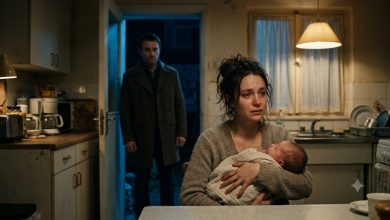
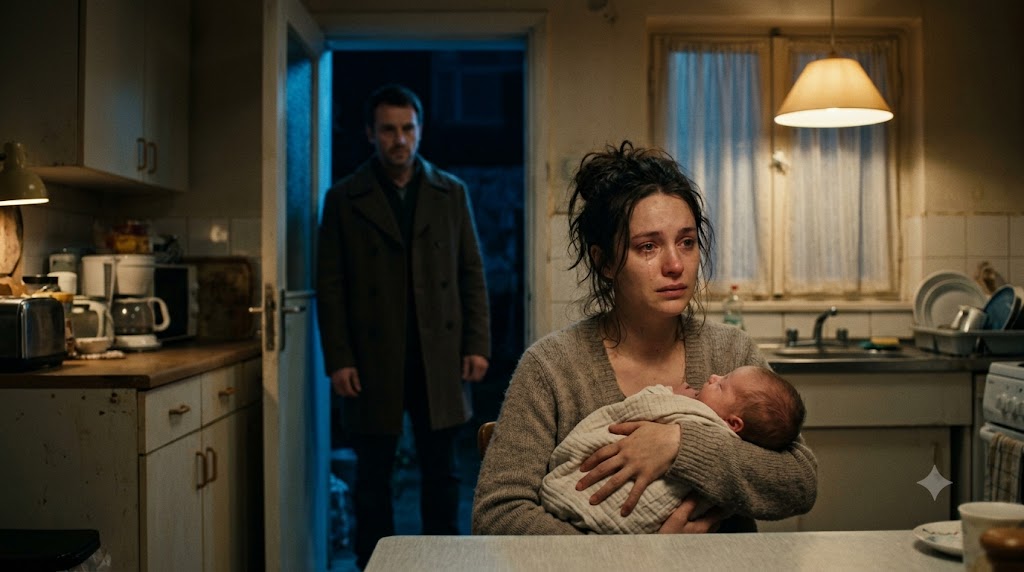
Darnell and Veronica arrived that Saturday afternoon.
I watched them from the front window as they sat inside their rented car for almost ten minutes, talking intensely as if they were preparing a strategy.
When they finally walked inside, Veronica gave me a hug.
She had never actually hugged me before.
“Raymond, we’re so incredibly sorry for your loss,” she said.
Then both of them looked around the room.
The clock on the wall.
The paintings.
The china cabinet.
Our wedding photograph.
They were not looking at memories.
They were taking inventory.
Veronica spoke softly, like every single word had been practiced.
“We’re just worried about you. It’s a lot for one person to handle alone. There’s absolutely no shame in needing support.”
Darnell started talking about the spare room in their Chicago condo. He mentioned the stairs, loneliness, the harsh winter ice, medical decisions, and all the paperwork.
Twice during the conversation, he asked about my finances.
Every single question was a test.
Then Veronica handed me a business card.
It was for a geriatric psychiatrist.
“We went ahead and made you an appointment,” she said. “Just to be safe. Grief can really affect a person’s judgment.”
I looked straight at my son.
“You mean old men like me might not be competent enough to manage their own money.”
Darnell looked down at the floor.
He could not meet my eyes.
I stood up.
“I need to make a quick call.”
“There’s really no need to involve lawyers,” Veronica said smoothly. “We’re family.”
That single sentence told me everything I needed to know.
I walked into the kitchen and dialed Harold’s number.
When he picked up, I only said three words.
“They’re here.”
Three days later, Darnell and Veronica came back to the house.
This time, they brought other people along with them.
An attorney wearing an expensive suit.
A woman holding a clipboard named Dr. Reeves, who was a geriatric evaluation specialist.
A social worker.
And Darnell, standing slightly behind all of them on my front porch like a man who wanted someone else to do the ugly work for him.
The attorney was holding a court order for a mental competency evaluation.
I let all of them inside.
For two long hours, they asked me questions meant to catch me slipping up.
The current date.
The name of the president.
My medications.
What I would do if I smelled smoke in the house.
They asked about Diane’s death and watched my face closely, as if grief itself could prove I was weak.
I answered every question carefully.
Diane had taught me through her letters that documentation was the only thing that mattered.
While they questioned me, Veronica wandered slowly through my house.
Her hand brushed against the piano bench.
The chair where Diane used to sit and read.
The hallway closet.
She moved around like someone imagining what would very soon belong to her.
When Dr. Reeves finished up and the attorney began asking about my understanding of estate management, I folded my hands together.
“I think it’s time for me to make that phone call now,” I said.
“Raymond,” Veronica started, “there’s really no need—”
Just then, the doorbell rang.
Harold walked in first.
Behind him came Marcus Webb, the private investigator Diane had hired.
Then came Detective Sandra Okafor from the financial crimes division.
Veronica’s face completely changed.
It was sudden, but unmistakable.
It was the face of a plan hitting reality.
“There must be some sort of misunderstanding here,” her attorney said, already sounding a lot less confident than before.
Harold smiled.
“No misunderstanding at all.”
Marcus placed a stack of documents and photographs down on my coffee table.
There were images of Veronica with men I had never seen before in my life.
Marriage records.
Probate filings.
Guardianship petitions.
Death certificates.
Property transfers.
Court records from California, Arizona, and Georgia.
Three previous marriages.
Three older widowers who had money.
Three estates that had passed almost entirely into Veronica’s hands.
Three families left with absolutely nothing after the courts decided those men had signed everything over willingly.
The pattern was clean.
Practiced.
Cruel.
Darnell just stared at the papers.
At first, he looked deeply ashamed.
Then confused.
Then afraid.
Finally, he looked like a man watching the very ground disappear right beneath his feet.
“These can’t possibly be real,” he whispered.
Harold placed a small voice recorder on the table.
“This was provided by Diane Cole,” he said. “It was recorded during a conversation she had with Veronica.”
He pressed the play button.
Diane’s voice filled the room.
It was calm.
Clear.
Steady.
“Veronica, I know what you’re planning to do. I know all about the other families.”
Then Veronica’s voice answered back, completely cold and stripped of any sweetness.
“You can’t prove a single thing, Diane. And when you’re gone, Raymond is going to need someone to handle things for him.”
Diane spoke again.
“Someone who will handle him right into a facility while she sells off his home.”
Veronica laughed softly.
“Someone who understands that sentiment doesn’t manage assets.”
Nobody in the room moved.
Darnell stared at the recorder as if it were alive.
I watched my son’s face as five full years of illusion broke completely apart.
It did not look like relief.
It looked exactly like falling.
Detective Okafor stepped forward and told Veronica she was being taken in for questioning related to elder financial exploitation and fraud.
Veronica turned quickly to Darnell.
“Don’t let them do this to us,” she said.
Darnell looked at her.
He really looked at her.
Maybe for the very first time in their marriage.
And he said absolutely nothing.
That silence was his answer.
After they all left, Darnell and I sat completely alone in the living room.
He leaned forward, resting his elbows on his knees and burying his face in his hands.
I did not rush over to comfort him.
Once, I would have crossed the room immediately and placed a hand on his back.
But grief has a way of changing the distance between love and wisdom.
I still loved my son.
I just no longer trusted love alone to tell me what was safe.
When Darnell finally looked up at me, his eyes were completely red.
“Dad,” he said, “I don’t even know where to start.”
“You don’t have to start anything tonight.”
“I missed her funeral.”
Three plain words.
Three unbearable words.
“I know,” I said.
“She must have hated me.”
“No,” I answered him. “She knew you would miss it. She forgave you before it even happened. That was just who your mother was.”
He covered his mouth with his hand and looked out toward the window.
“I don’t deserve that.”
“No,” I said quietly. “You don’t.”
He looked startled. Maybe he expected me to soften the truth for him.
“But she gave it to you anyway,” I continued. “That does not erase what you did. It just gives you something to spend the rest of your life trying to become worthy of.”
For the first time in years, Darnell did not argue with me.
The months that followed were filled with lawyers, interviews, court hearings, and piles of documents. Veronica’s history was even worse than what Marcus’s report had originally suggested. Families in other states had spent years trying to explain what had happened to their fathers and uncles, only to be dismissed by courts as greedy relatives.
Diane’s evidence finally gave them the one thing they had never had before.
A clear pattern.
Eight months later, Veronica accepted a plea deal and was sentenced to twelve years. Some of the families recovered a part of what had been taken from them, though it was never enough. Money can come back to you in pieces.
Time cannot.
Trust cannot.
Darnell ended up moving back to Detroit.
Not into my house, though.
I made that part very clear to him.
He rented a small apartment near Corktown and took a job working at a credit union. He came by the house on Sundays whenever he was invited. Sometimes we talked. Sometimes we simply ate our meal.
Sometimes I looked across the table and saw the little boy from Diane’s photo album.
Sometimes I saw the man who had missed his own mother’s funeral.
Both of those things were true.
That is the hardest thing about family.
The truth rarely arrives clean.
Last Sunday, Darnell brought me a small basil plant from the Eastern Market.
“I thought this spot right here should have something green,” he said.
He placed it directly on the kitchen windowsill, the exact spot where Diane used to keep her herbs.
It took me a moment before I could answer him.
“Your mother would have really liked that.”
His eyes filled up with tears, but he did not make a scene. He turned the pot toward the light, washed his hands in the sink, and helped me set the table.
I still live in the house on Fielding Street.
Diane’s crossword puzzle is still sitting on the kitchen table. Her reading glasses are still on the nightstand.
I am not ready to move them yet.
Maybe I never will be.
People talk about moving on from grief as if grief is a room you eventually just walk out of. I do not believe that anymore.
I think grief simply becomes a part of the house.
You learn which specific floorboards creak.
You learn exactly where the light falls.
Every single morning, I wake up in a home my wife loved me enough to make completely safe.
She did it all without asking for applause.
She did it in ledgers.
In rental agreements.
In letters.
In careful notes.
In conversations she was brave enough to record.
Diane protected me from poverty.
But more than that, she protected me from being handled.
Veronica looked at me and saw an old man who could be moved around like a piece of furniture. A grieving widower who could be cornered by paperwork and guided right out of his own life in the name of care.
For a while, Darnell saw me through her eyes, too.
But Diane saw me clearly.
Her husband.
Still whole.
Still capable.
Still worth defending, even after she was gone.
People often think that the loudest love is the truest love.
Diane never once raised her voice.
She simply never stopped.
At night, when the house settles down and the old clock in the living room ticks a bit too loudly, I sometimes take Diane’s final letter out from the drawer and read the very last lines.
Live, Raymond. Not just safely. Fully. Take your time. Let people earn their way close to you. And when you miss me, just look at what I built and know that every single brick of it was love.
After I finish reading it, I fold the letter up carefully and place it back inside the envelope.
Then I turn off the kitchen light and walk through the house she saved for me.
My grief is still incredibly heavy.
An yet, now I know exactly what rests right beneath it.
Love.
Quiet love.
Patient love.
A love strong enough to keep protecting me, even long after the voice that carried it had gone completely silent.