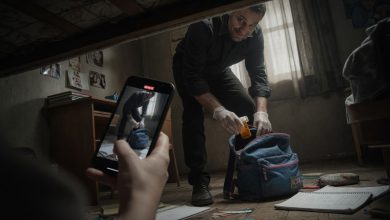
MY PHONE BUZZED AT 7:12 A.M. “GRANDPA PASSED AWAY LAST NIGHT,” MY FATHER SAID IN A COLD VOICE.
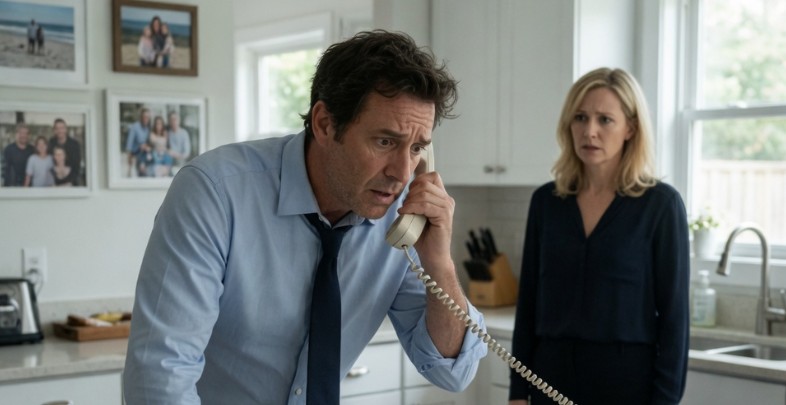
At 7:12 on a Tuesday morning, my father phoned to inform me that my grandfather had passed away, all while Grandpa sat right across from me at the kitchen table, perfectly healthy, buttering a slice of toast.
I recall the exact time because I was filling Grandpa’s favorite chipped blue mug with coffee when my phone started vibrating against the countertop. Since my hands were wet, I answered on speaker without looking at the screen first, without bracing myself, and without knowing that this single, ordinary phone call was about to tear my family apart in a way that could never be repaired.
My father bypassed any greeting.
He didn’t ask how I was doing.
He didn’t inquire about how Grandpa was feeling following his overnight stay at the hospital for heart observation.
He simply stated, flat and cold, “Grandpa died last night. Funeral Friday. He left us everything. You get nothing.”
The kitchen went completely silent.
The coffee kept pouring until it nearly spilled over the rim of the mug. Outside, the early morning light hit the maple tree in my backyard. The refrigerator hummed its usual tune. The wall clock ticked right above the pantry door. Across the table, Walter Bennett—my grandfather, my safest protector, the very man my father had just pronounced dead—slowly put down his butter knife.
Then my mother’s laughter echoed through the background of the call.
“Finally,” she chimed in. “You’re out.”
I remained silent.
I didn’t gasp or cry out.
I only stared across the table at Grandpa.
He was eighty-two years old, dressed in his navy cardigan over his pajama shirt, with his silver hair still messy from sleeping. His reading glasses were perched low on his nose, and right next to his coffee mug lay a sealed manila envelope from his attorney, Dana Harper.
He had spent the night at my place because I had picked him up from the hospital the evening before after a routine cardiac observation. Thank goodness, it hadn’t been a major medical crisis. The doctor called it a brief scare and a warning sign—just a reason to keep an eye on him overnight, tweak his medication, and ensure his heart rhythm stabilized before discharging him.
However, Grandpa had refused to go back to his own home.
Not to his house.
And certainly not with my parents waiting around.
“Take me to your house, Emily,” he had requested as I helped him into my car outside the clinic. “Just for tonight. I don’t want Richard knowing where I am until we have our meeting with Dana.”
Richard was my father.
Linda was my mother.
And for the very first time in my life, Grandpa had spoken their names with a sense of fear rather than mere disappointment.
For the past six months, he had been quietly gathering bank records, check copies, old power of attorney documents, and notes written in his neat block print. He had discovered two massive “loans” that my father insisted were actually gifts. Then he uncovered bank transfers he had absolutely no memory of approving. Soon after, he found checks signed in his name that didn’t match his actual handwriting.
Initially, he had tried to make excuses for it.
He blamed old age.
A forgotten conversation, perhaps.
A simple misunderstanding.
A son just helping out with files after his mother had passed away.
But Walter Bennett was old, not foolish.
On multiple occasions, he had expressed to me that he no longer trusted my father around finances, signatures, or anything that could later be twisted into fake permission.
He had updated his online banking passwords.
He had officially canceled the power of attorney my father had pressured him to sign shortly after Grandma died.
And he had arranged a meeting with Dana Harper for that very afternoon to get all his legal affairs properly updated.
That morning was supposed to be completely routine.
A normal breakfast.
Some coffee.
A brief drive downtown.
Signing the paperwork.
Instead, my parents were actively organizing a funeral for a man currently sitting alive at my kitchen counter.
My father kept talking on the line, sounding nearly upbeat now that I hadn’t replied.
“Don’t bother coming over and making a scene. We’re handling everything. The lawyer already called. You were never in the will.”
My stomach dropped instantly.
Not because I believed a word he said.
But because his speech sounded so incredibly rehearsed.
Funeral Friday.
The lawyer already called.
You were never in the will.
It was only Tuesday morning.
He hadn’t provided a hospital name, a cause of death, a time of passing, or a funeral home. There were none of the specific details that grief normally focuses on. There was only talk of the inheritance.
My mother laughed once more, and I heard a kitchen cabinet slam shut in the background, as casually as if she were prepping breakfast while celebrating my banishment from a family I had spent years trying to hold together.
Grandpa didn’t cut them off.
He just sat there listening, his jaw clenched tight, with one hand resting firmly on the sealed envelope.
I turned the phone fully toward him.
My father pressed on.
“If you try to contest anything, you’ll lose. We have witnesses.”
Witnesses.
The word lingered heavily in the quiet room.
I watched the expression on Grandpa’s face shift.
The deep hurt in his eyes hardened into something much colder.
Pure resolve.
He leaned in close to the phone so my father would hear every vibration of his voice.
“Richard?”
The line went so dead silent I honestly thought the connection had dropped.
Then I heard my mother catch her breath in a sharp gasp.
My father let out a sound I had never heard him make before in my life.
It was absolute panic.
“Dad?” he choked out, completely breathless. “Where are you?”
Grandpa’s voice didn’t waver.
“Alive. And listening.”
He didn’t raise his voice.
He didn’t hurl accusations.
He simply reached out, tapped the screen to end the call, and leaned back against his chair.
For a few long seconds, neither of us uttered a sound.
Then Grandpa looked over at me and said, “Now we know exactly what they were planning.”
For the majority of my adult life, my parents had labeled me as dramatic whenever I pointed out that something was wrong.
When Grandma was sick, I caught duplicate bill payments and strange withdrawals from accounts she was no longer physically capable of managing. I noticed cash vanishing much faster than medication and groceries could account for. I even found a check made out to my father’s contracting business with Grandma’s shaky signature on it, even though she had been far too weak to even sit upright in bed that entire week.
When I questioned them about it, my father glared at me as though I had desecrated a holy object.
“You actually think I would steal from my own mother?”
My mother burst into tears on the spot.
That was her special talent.
She could cry much faster than most people could manage to tell the truth.
“Emily,” she sobbed, “how could you accuse your father after everything he does for us?”
Before long, other relatives were calling me unstable, jealous, controlling, and mean-spirited. My father told everyone that I was trying to hijack Grandpa and Grandma’s money because I was greedy for an inheritance. My mother claimed that grief had simply made me paranoid. By the time Grandma passed away, I was only invited to family holidays if I explicitly promised not to “bring up money.”
So, I eventually stopped showing up.
But Grandpa had been paying attention.
He hadn’t confronted them openly back then. I think a part of him just couldn’t bear to know the truth. Losing Grandma had completely broken him. They had been happily married for fifty-eight years. They still held hands tightly in doctor waiting rooms. She would still call him Waltie when she wanted him to stop acting like he wasn’t exhausted.
After she was gone, he seemed to shrink inside his own house.
And my father eagerly stepped into that vacant space with legal forms, explanations, and a sense of false urgency.
“Dad, just sign this so I can help take care of things.”
“Dad, online banking is much too complicated for you to handle.”
“Dad, Emily is just trying to scare you.”
“Dad, family looks out for family.”
But Grandpa had been an auto mechanic, a veteran, a church treasurer, and a meticulous man who had balanced his checkbook every single Friday for sixty years. He might have been mourning, but numbers still made perfect sense to him.
A few months after Grandma’s funeral, he began calling my phone directly instead of reaching out through my parents.
“Could you help me print a document?”
“Could you take a quick look at this statement?”
“Do you remember if I ever paid Richard back for that roof repair work?”
Every inquiry sounded entirely casual.
None of them actually were.
The very first time I looked at the transfers, I felt sick to my stomach.
Five thousand dollars sent to Richard Bennett Contracting.
Twelve thousand dollars labeled as consulting fees.
Another eight thousand dollars marked as equipment reimbursement.
There were checks written out in Grandpa’s name that he flatly stated he had never signed. There were online transfers sent from digital devices he didn’t even own. There were payments routed directly to accounts tied to my father’s business. There was a “loan repayment” my father insisted was agreed upon verbally within the family, though no one else had ever heard a word about it.
Grandpa did confront him exactly once.
My father arrived fully prepared for it.
He brought along printed spreadsheets, confident explanations, and my mother, who sat right beside him wiping her eyes while murmuring, “Your father is only trying to look after you, Walt. Emily has filled your head with awful fears.”
After that day, Grandpa stopped confronting them.
Instead, he started gathering evidence.
That Tuesday, right after my father called to announce his sudden death, I didn’t bother waiting around for our afternoon legal appointment.
I helped Grandpa get his shoes on, grabbed the sealed manila envelope, and drove him directly to Dana Harper’s office downtown.
I called ahead while navigating the traffic.
Dana picked up on the second ring.
“Emily?”
“It’s an emergency.”
Grandpa sat quietly in the passenger seat, staring straight out the windshield.
I explained to Dana exactly what had just taken place on the phone.
She didn’t gasp.
She didn’t tell me that it sounded impossible.
Experienced attorneys know better than to underestimate the depth of family greed.
“Come over immediately,” she instructed. “Do not answer any more calls. Do not text them back. Just bring the envelope.”
Dana Harper’s law office was located on the second floor of an old brick building directly above a bakery, which made the entire stairwell smell wonderfully like cinnamon and melted butter. I had been there once years ago with Grandma, back when she and Grandpa updated their wills after a neighbor passed away unexpectedly, reminding everyone that legal paperwork matters most when people are too heartbroken to think straight.
Dana met us right in the hallway.
She was in her late fifties, with dark hair touched by silver, sharp eyes, and an inner calm that made panic feel foolish for staying in the room.
“Walter,” she said softly.
Grandpa nodded his head.
“Dana.”
She guided us into a spacious conference room where a legal pad was already waiting and a paralegal was setting up an audio recorder near the center of the table.
Grandpa handed her the sealed envelope.
“Emily stays in the room,” he specified.
Dana looked over at him.
“Are you entirely sure?”
“She is the sole reason I am standing here right now.”
My throat tightened up at his words.
Dana sliced open the envelope and examined the documents in complete silence.
Inside were notarized duplicates of his updated will, official revocation forms for the previous power of attorney, a handwritten timeline of events, copies of bank statements, and a signed letter detailing the suspicious account transactions he wanted investigated if anything should happen to him prior to the appointment.
He had also included specific directives telling Dana to contact Adult Protective Services immediately if he ever reported being threatened, intimidated, or experiencing a sudden medical incapacity involving my parents.
Dana read through the statement twice.
Then she looked directly at Grandpa.
“Walter, did you authorize Richard or Linda to speak on your behalf regarding your death, your funeral arrangements, or your estate?”
“No.”
“Did you ever tell anyone you wanted Emily cut out of your will?”
“No.”
“Did you give your son authorization to access or distribute any estate information?”
“No.”
“Do you believe that Richard and Linda are acting in your best interest?”
Grandpa stared down at the table for a brief moment.
When he looked back up, his eyes were glossy but entirely steady.
“No. I believe they were simply waiting for me to die. This morning, they just grew impatient.”
Dana asked me to repeat the details of the phone call while the audio recorder captured everything.
My voice trembled at first.
Then it grew steady.
I walked through the exact time, the specific wording used, my mother’s background laughter, my father’s claims about a planned funeral, the mention of their secret witnesses, and Grandpa’s final response.
The paralegal quickly printed out a copy of my phone’s call log.
Dana had Grandpa sign a fresh affidavit while the details were still completely fresh in our minds. The paralegal stamped and notarized it on the spot.
Following that, Dana reached out to the county clerk to verify that no death certificate had been submitted, no probate petition had been filed, and no emergency estate proceedings had been opened.
There was absolutely nothing on file.
Of course there wasn’t.
Grandpa was alive and well, sitting right next to me, answering questions with perfect clarity.
Even so, my hands started to shake.
Not because I believed my parents’ ridiculous claims would hold up legally.
But because I knew exactly how incredibly convincing they could sound to the outside world.
My parents had spent decades carefully building up their public image. At their church, they were known as incredibly generous volunteers. At neighborhood block parties, they were always the helpful couple showing up with warm casserole dishes and extra folding chairs. My father knew exactly how to shake hands firmly and look people dead in the eye. My mother knew how to lower her voice to a whisper and sound completely heartbroken without ever saying anything specific.
They had successfully made me look unstable to the rest of the family before.
They could easily try to do it again.
Grandpa reached out and gently touched my wrist.
“Keep your seat,” he told me softly. “Let the facts do the talking for us.”
Before we could mapping out our next moves, Dana’s receptionist knocked softly on the door and opened it just wide enough to whisper something urgent.
Dana’s facial expression hardened.
She quietly closed the legal folder sitting in front of her.
Then she turned her attention to us.
“Your parents are out in the lobby. They have brought two police officers with them, and they are claiming that Emily has kidnapped you.”
For a brief second, the room felt like it was spinning.
Then Grandpa let out a short laugh.
Not because the situation was funny.
But because the lie was so incredibly bold it had become downright ridiculous.
“Well, let’s not keep them waiting out there,” he said.
Dana decided to bring the police officers into the room first.
That was a calculated move.
It completely disrupted whatever dramatic scene my parents had spent the drive over planning.
The officers were respectful but highly alert. One was an older man with a gray mustache and exhausted eyes. The younger officer was already glancing back and forth between Dana, Grandpa, and me, clearly trying to piece together the truth from our expressions.
Dana introduced herself and clarified that Walter Bennett was her legal client, present entirely of his own free will for a pre-scheduled estate planning and financial protection meeting.
Only then were my parents escorted into the room separately.
My father walked in loudly, speaking before anyone even had a chance to ask him a question.
“There she is,” he announced, pointing a finger directly at me. “She’s been manipulating his mind for months. She hid him away overnight. We had no idea where my father even was. Now she’s trying to force him into changing his will.”
My mother trailed in right behind him, already putting on a show of tears.
“We’re just so terrified for him,” she whispered to the officers. “He’s incredibly confused. He just suffered a heart episode. Emily has always wanted to control things. We only want Dad to be safe.”
Grandpa let them finish their entire speech.
He sat perfectly still, his fingers folded together on top of the table.
Then, he stood up slowly.
He looked both of the officers dead in the eye.
“I am here completely of my own choice. I asked my granddaughter to drive me here. I am not confused in the slightest. And my son was calling people early this morning claiming that I was already dead.”
The younger officer blinked in surprise.
My father’s jaw tightened up instantly.
“That’s not how it happened.”
Grandpa looked straight at him.
“It is exactly how it happened.”
The older officer politely asked Grandpa to show his identification.
Grandpa handed it over without hesitation.
Then the officer began asking him standard orientation questions: his full name, the current date, where he was right now, why he was visiting the office, the name of his heart specialist, where he had spent the previous night, and what specific medications had been modified during his hospital stay.
Grandpa answered every single question without a moment’s pause.
Dana then presented the officers with copies of his fresh statement, the revocation papers, the printed call log, and the official appointment confirmation from her office calendar.
My father changed his strategy.
In an instant.
“It was just a huge misunderstanding,” he claimed. “I simply meant he was as good as gone after that horrible heart scare. We were just incredibly emotional.”
The younger officer looked squarely at him.
“You specifically said the funeral was on Friday?”
My father’s mouth opened.
Then it closed.
My mother quickly jumped in to save him.
“We were frantic with worry. People say things they don’t mean when they’re upset.”
The older officer followed up, “And what about the inheritance distribution comments?”
Complete silence filled the room.
My father’s face flushed a deep red.
“That was strictly family business.”
Dana’s voice rang out, cutting right through the tension.
“Not when it involves making false statements regarding a living individual’s death and the potential financial exploitation of an elderly citizen.”
My mother instantly stopped crying.
That always seemed to happen the moment the facts became too specific to argue with.
By midday, the officers officially confirmed that this was absolutely not a kidnapping situation. They strongly advised Grandpa to file a formal report regarding the suspected financial exploitation, the false statements made using his name, and the potential harassment.
Dana contacted Adult Protective Services right from her desk phone.
She also set up an emergency meeting with the fraud department at Grandpa’s bank and had him sign a directive to freeze specific account transfers while a full investigation took place.
A formal cease-and-desist letter was mailed out that very afternoon, ordering Richard and Linda Bennett to stop speaking on behalf of Walter Bennett to any banks, funeral homes, relatives, medical staff, or any institutions connected to his estate.
My parents stormed out of Dana’s office without uttering a single word to me.
But the phone calls started ringing before we even made it out to my car.
Various cousins.
Neighbors from down the street.
A long-time church friend of my mother’s.
My aunt Patricia opened her call by demanding, “Emily, what on earth have you done?”
My parents were busy telling everyone in our social circle that I had completely brainwashed Grandpa and dragged him off to a lawyer’s office before he even had a chance to “recover his senses.” They claimed that I had intercepted his medical updates, hidden his prescriptions, and tried to cut them entirely out of his will.
This time around, Grandpa didn’t leave me to defend myself alone.
He started making the phone calls himself.
He kept his tone calm.
There were no dramatics.
No drawn-out explanations.
He just offered the plain truth.
“I’m alive,” he informed Aunt Patricia. “I was never missing. I explicitly asked Emily for her help. I just need some real distance from Richard and Linda right now.”
That single sentence did far more damage to my parents’ fabricated story than any amount of shouting ever could have.
Several relatives went totally silent.
A select few actually called back to apologize to me.
Most of them simply stopped reaching out altogether, because the truth made them uncomfortable and choosing a side required a level of courage they just didn’t possess.
The bank’s internal investigation dragged on for months.
We didn’t manage to recover all the missing money.
Some of the transactions had occurred too long ago. Some were surrounded by paperwork that my father had carefully constructed over time. Other transfers required a deeper legal battle than Grandpa had the physical energy to fight. However, multiple checks were officially flagged for clear signature forgery, and two large transfers sent to my father’s business were successfully reversed after irregular digital authorization records were discovered.
APS fully documented the ongoing patterns of manipulation surrounding the old power of attorney document.
Dana used that official file to heavily fortify Grandpa’s estate protections, update his trust, restrict account access, and ensure that absolutely no one could quietly relocate him, medicate him, represent his wishes, or speak for him without direct, multi-step verification.
For the first time in many years, Grandpa’s life belonged entirely to him again.
He lived for another fourteen months.
They were not easy months by any means.
His heart remained quite fragile. His deep grief over losing Grandma seemed to intensify during certain seasons of the year. Some days, he would forget where he had set down his reading glasses and would get incredibly frustrated, because forgetting even a small thing made him fear that my parents’ cruel accusations had planted a permanent seed of doubt in his mind.
But those months were entirely honest.
He eventually moved into a lovely independent living community located just a short drive from my apartment. It wasn’t overly fancy, but it was bright, secure, and packed with residents who played card games with fierce competitiveness and gossiped about the weekly pudding flavors as if it were national politics.
Every single Friday, I would pick him up for a lunch date.
Sometimes we would head over to the diner off the highway, where he always ordered the meatloaf and grumbled that absolutely nobody could make gravy quite like Grandma used to. Sometimes we would just sit on a bench in the park and watch the local kids climb around the playground. Other times, we would eat simple sandwiches right in my kitchen—the exact spot where he had sat and listened to his own fake death being announced over the speakerphone.
We talked about Grandma.
We talked about baseball statistics.
We talked about his old days serving in the Navy.
And we talked about how long it had ultimately taken him to admit that I had been right all along.
One afternoon, he looked across the diner booth at me and offered a sad smile.
“I absolutely hate that your father forced you to grow up dealing with all of this,” he admitted. “But I am so incredibly proud of the woman it turned you into.”
I had to quickly turn my head and look out the window because I didn’t want to end up crying right into my coffee cup.
“I just wish that being right hadn’t ended up costing us so much,” I replied softly.
He nodded his head in agreement.
“The truth usually sends you a bill.”
When he finally passed away the following spring, it happened very peacefully.
A genuine phone call came through that time.
It was from the care director at his community.
The voice was gentle.
Deeply respectful.
Filled with actual medical details.
There was no mention of an inheritance.
No angry threats.
No cruel laughter echoing in the background.
There was a legitimate death certificate issued, a real funeral service held, and absolutely no fake announcements created by people desperate to divide up whatever assets he had left behind.
My parents were not placed in charge of any of the arrangements.
They were not named as the executors of his estate.
Dana managed every single detail exactly the way Grandpa had laid it out in his instructions.
His final estate plan took care of his outstanding medical and care debts first. After that, it left specific donations to a local veterans’ charity, the church food pantry that Grandma had spent years loving, and a small scholarship fund at the local technical college where Grandpa had once taught night classes on automotive engine repair.
The remaining balance was split evenly between me and my two cousins, held securely in a protected trust.
It was clear.
It was fair.
It was completely untouchable.
My parents attempted to contest the will anyway.
Of course they did.
But by that point in time, the paper trail was simply too strong, his medical records were far too clear, the APS documentation was incredibly thorough, and Grandpa’s own signed video statements were completely direct. The legal case didn’t get very far at all. Their own hired attorney actually withdrew from the case entirely after reviewing the mountain of evidence that Dana provided.
My father sent me one final text message.
You turned him against us.
I stared at the words on my screen for a long time.
Then, I simply hit delete.
I didn’t block his number out of explosive anger.
I blocked him because I was completely done letting lies show up in my life uninvited.
Sometimes, I still replay that entire Tuesday morning in my mind.
The smell of the coffee.
The chipped blue mug.
My mother’s distant laugh.
My father’s rehearsed piece of cruelty.
The calm way Grandpa sat and listened without cutting them off.
And then, that single word.
Richard?
The truth had answered back using my grandfather’s actual voice, and the entire elaborate lie crumbled to pieces before it ever had a chance to reach a probate court.
It didn’t fix my broken family.
Some things simply cannot be repaired because they were never actually whole or healthy in the first place.
But it managed to do something far better.
It freed Grandpa from having to spend the final segment of his life wondering whether he was crazy for trusting his own eyes and ears.
It freed me entirely from the miserable role my parents had tried to assign me for years: the dramatic, unstable, jealous, difficult daughter who always asked far too many questions.
And it taught me that legal documentation isn’t cold or clinical when love is actively under attack.
Sometimes, documentation is the ultimate form of devotion.
A plain bank statement can be an act of devotion.
A phone call log can be an act of devotion.
A notarized letter sealed inside an envelope sitting right next to a coffee mug can be a profound act of devotion.
Grandpa knew my parents were fully capable of lying to get what they wanted.
He just had no idea they would go so far as to declare him dead before he had even finished eating his breakfast.
In the end, they didn’t lose their battle because they ran out of luck.
They lost because the man they assumed was weak had already quietly prepared the absolute truth.
And because the granddaughter they tried so hard to cut out happened to be the one person who stayed close enough to hear him say it.
THE END